Zinc acts as a formidable gatekeeper for the immune system, playing a critical role in antiviral defense. It functions by supporting the development and communication of immune cells, and it possesses direct antiviral properties that can inhibit the replication of various viruses, including coronaviruses and rhinoviruses [1][2]. Specifically, intracellular zinc has been shown to interfere with the activity of RNA-dependent RNA polymerase, an enzyme that viruses require to replicate their genetic material inside host cells [3]. By slowing or stopping this replication process, adequate zinc levels help the body limit the duration and severity of viral infections, effectively reinforcing the cellular barrier against pathogens [4].
Beyond immunity, zinc is physiologically indispensable for hormonal health and tissue repair. It is a vital component in the production of testosterone, influencing the function of Leydig cells and supporting steroidogenesis; deficiencies in zinc have been directly linked to hypogonadism and lower testosterone levels in men [5][6]. Furthermore, zinc plays a central role in every phase of the wound healing process, from coagulation and inflammation to the remodeling of tissue. It is a cofactor for collagen synthesis and is required for the proliferation of skin cells (keratinocytes) and fibroblasts, making it essential for repairing injuries and maintaining skin integrity [7][8].
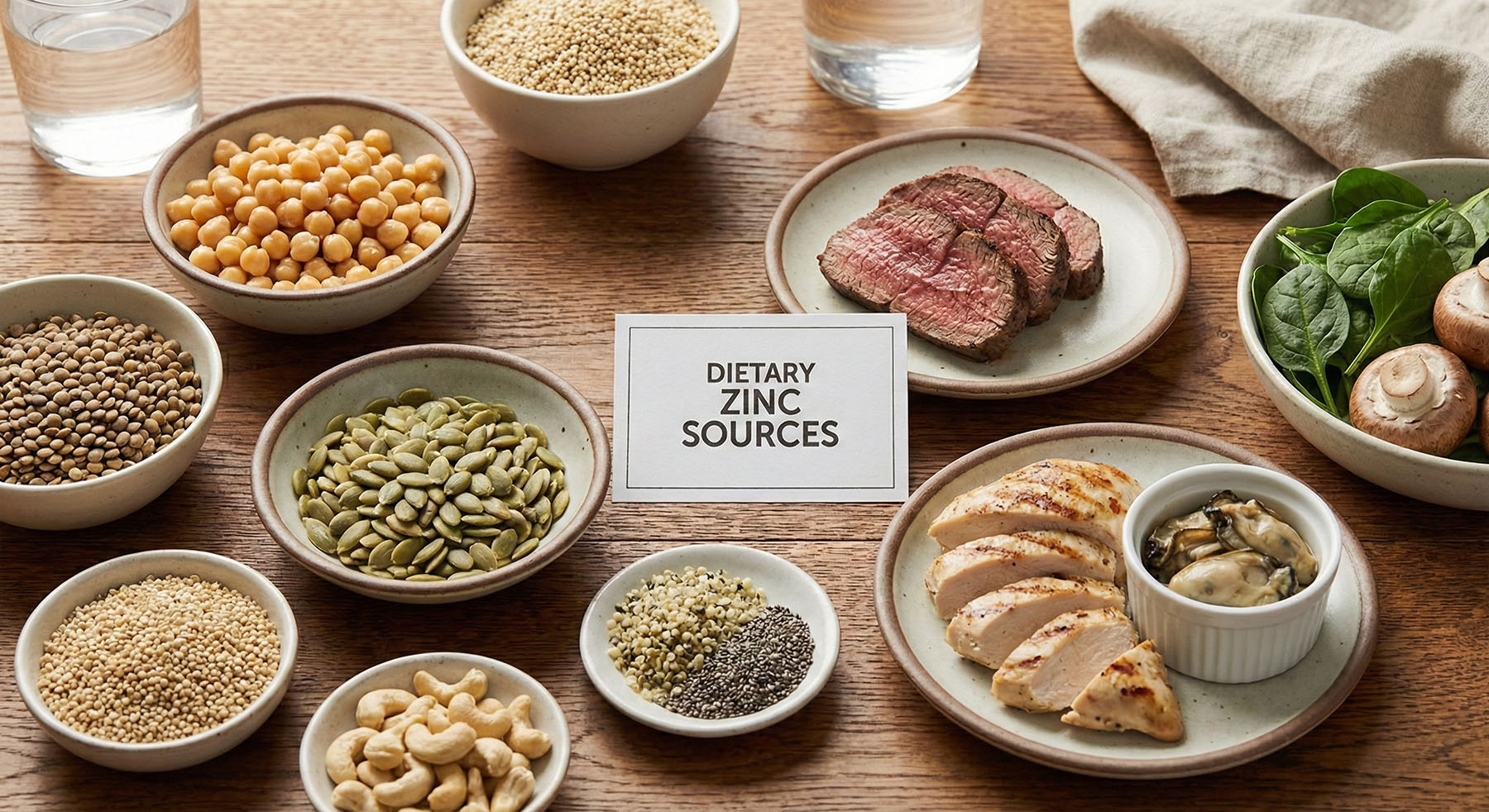
Despite its importance, the human body lacks a specialized storage system for zinc, meaning it cannot reserve excess amounts for future use [9]. This makes a consistent daily intake mandatory to prevent deficiency and maintain a homeostatic state. To meet these needs, one should prioritize high-density dietary sources. Oysters are the single richest food source of zinc, but red meat (particularly beef), crab, and lobster are also excellent animal-based options [10]. For plant-based sources, pumpkin seeds, hemp seeds, cashews, and chickpeas provide significant amounts, though their bioavailability is generally lower than animal sources due to the presence of phytates [11].
References
- Wessels, I., Maywald, M., & Rink, L. (2017). Zinc as a Gatekeeper of Immune Function. Nutrients, 9(12), 1286.
- Read, S. A., Obeid, S., Ahlenstiel, C., & Ahlenstiel, G. (2019). The Role of Zinc in Antiviral Immunity. Advances in Nutrition, 10(4), 696–710.
- te Velthuis, A. J., et al. (2010). Zn(2+) inhibits coronavirus and arterivirus RNA polymerase activity in vitro and zinc ionophores block the replication of these viruses in cell culture. PLoS Pathogens, 6(11), e1001176.
- Hemilä, H. (2017). Zinc lozenges and the common cold: a meta-analysis comparing zinc acetate and zinc gluconate, and the role of zinc dosage. JRSM Open, 8(5).
- Prasad, A. S., et al. (1996). Zinc status and serum testosterone levels of healthy adults. Nutrition, 12(5), 344-348.
- Fallah, A., Mohammad-Hasani, A., & Colagar, A. H. (2018). Zinc is an Essential Element for Male Fertility: A Review of Zn Roles in Men’s Health, Germination, Sperm Quality, and Fertilization. Journal of Reproduction & Infertility, 19(2), 69–81.
- Lin, P. H., et al. (2017). Zinc in Wound Healing Modulation. Nutrients, 10(1), 16.
- Lansdown, A. B., et al. (2007). Zinc in wound healing: theoretical, experimental, and clinical aspects. Wound Repair and Regeneration, 15(1), 2-16.
- Rink, L., & Gabriel, P. (2000). Zinc and the immune system. Proceedings of the Nutrition Society, 59(4), 541-552.
- National Institutes of Health (NIH). (2022). Zinc: Fact Sheet for Health Professionals. Office of Dietary Supplements.
- Lönnerdal, B. (2000). Dietary factors influencing zinc absorption. The Journal of Nutrition, 130(5), 1378S-1383S.
Comments are closed