
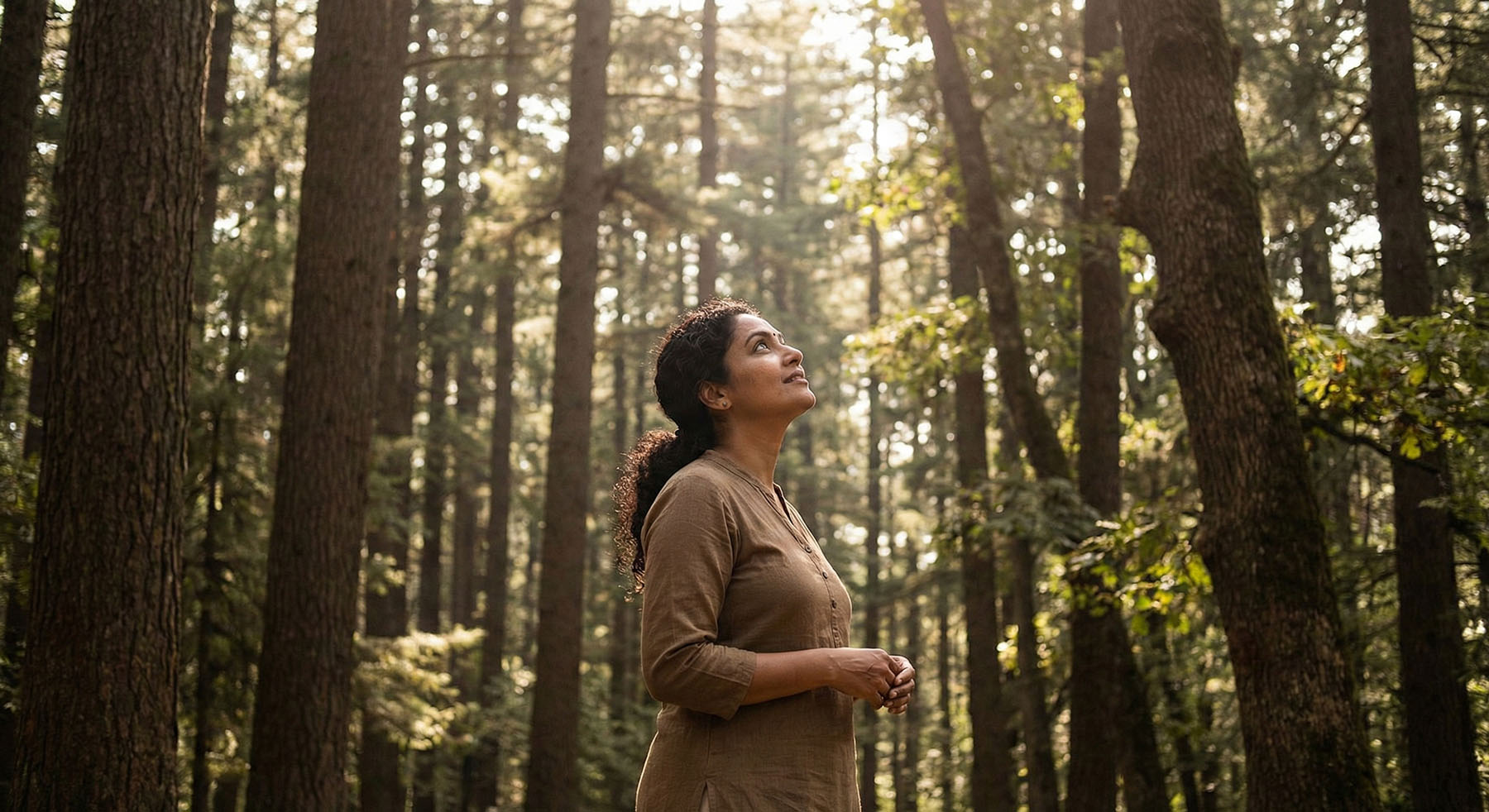
Originating in Japan in the 1980s as a response to tech-induced burnout, Shinrin-yoku—or “forest bathing”—is a bridge between us and the natural world. Unlike hiking or jogging, which focus on physical exertion and reaching a destination, forest bathing is a practice of quiet, mindful immersion. It requires slowing down to engage all five senses: listening to the rustling leaves, touching the texture of bark, and visually absorbing the fractured light filtering through the canopy. This intentional pause allows the mind to drift away from the stressors of urban life and recalibrate to the rhythm of nature, transforming a simple walk into a restorative therapy.
The physiological impact of this practice is rooted in invisible chemistry. Trees and plants emit volatile organic compounds called phytoncides to protect themselves from rotting and insects. Research has shown that when humans inhale these compounds, they trigger a significant biological response. Specifically, phytoncides have been linked to an increase in the number and activity of Natural Killer (NK) cells—a type of white blood cell vital to the innate immune system that fights tumors and virus-infected cells. This suggests that the forest atmosphere effectively acts as a natural booster for human immune function, with effects that can last for days after the excursion [1].
Beyond immunity, forest bathing acts as a powerful regulator for the autonomic nervous system. Modern life often keeps us in a state of sympathetic dominance (fight or flight), but time spent in a forest environment shifts the body toward parasympathetic activity (rest and digest). Clinical studies have demonstrated that Shinrin-yoku significantly lowers cortisol (stress hormone) concentrations, reduces pulse rate, and lowers blood pressure compared to city environments. By reducing physiological stress markers, the practice supports long-term cardiovascular health and mental well-being, proving that nature is not just a backdrop for leisure, but a critical component of public health [2, 3].
References
- Li, Q. (2010). Effect of forest bathing trips on human immune function. Environmental Health and Preventive Medicine, 15(1), 9–17.
- Park, B. J., Tsunetsugu, Y., Kasetani, T., Kagawa, T., & Miyazaki, Y. (2010). The physiological effects of Shinrin-yoku (taking in the forest atmosphere or forest bathing): evidence from field experiments in 24 forests across Japan. Environmental Health and Preventive Medicine, 15(1), 18–26.
- Hansen, M. M., Jones, R., & Tocchini, K. (2017). Shinrin-Yoku (Forest Bathing) and Nature Therapy: A State-of-the-Art Review. International Journal of Environmental Research and Public Health, 14(8), 851.
Comments are closed