
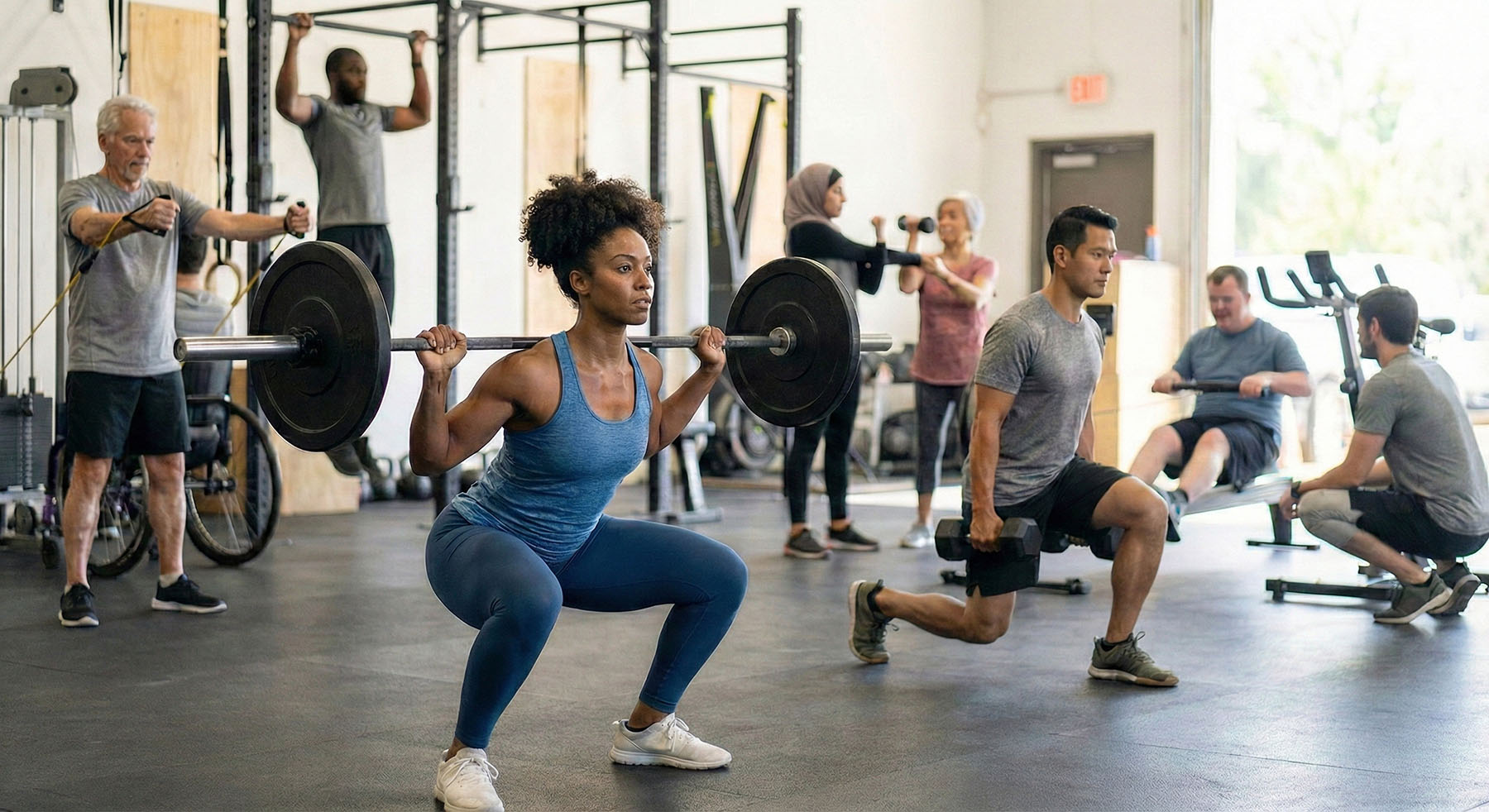
Many people use the terms “flexibility” and “mobility” interchangeably, but distinguishing between the two is critical for long-term physical health. Flexibility is passive; it is simply the measurement of how far a muscle can lengthen when an external force (like gravity or a partner) pushes it. Mobility, however, is active. It is the ability to control your limbs through that range of motion using your own muscular strength. While flexibility allows you to assume a position, mobility gives you the neurological control and strength to move in and out of that position safely. Without the active component of mobility, a flexible joint is essentially unstable and vulnerable.
The necessity of mobility becomes increasingly apparent as we age. Functional movements—such as the deep squat required to sit in a chair, or the overhead reach needed to grab an item from a shelf—rely on active range of motion, not just passive tissue elasticity. If you have the flexibility to touch your toes but lack the strength to control your hamstrings and spine at that end range, you are at a higher risk for strains and chronic pain. Prioritizing mobility training ensures that your nervous system feels safe accessing these ranges of motion during daily tasks, thereby maintaining your independence and functional capacity well into your later years.
To transition from being merely flexible to truly mobile, you must add strength at the end of your range of motion. Traditional stretching relaxes the muscle, but mobility training demands tension. By engaging your muscles when they are fully lengthened, you signal to your body that this position is safe to inhabit. This process strengthens the connective tissues and stabilizes the joint at its most vulnerable points, effectively “bulletproofing” your body against injury. Research consistently suggests that while static stretching has its place, resistance training and active movement through full ranges of motion are superior for injury prevention and long-term joint health.
References
- Lauersen, J. B., Bertelsen, D. M., & Andersen, L. B. (2014). The effectiveness of exercise interventions to prevent sports injuries: a systematic review and meta-analysis of randomised controlled trials. British Journal of Sports Medicine, 48(11), 871-877. (Highlighting that strength training reduced sports injuries to less than 1/3 and overuse injuries by almost 50%, while stretching showed no significant effect).
- Suchomel, T. J., Nimphius, S., & Stone, M. H. (2016). The importance of muscular strength in athletic performance. Sports Medicine, 46(10), 1419-1449. (Discussing the vital role of strength in joint stability and injury resilience).
- Iwamoto, J., et al. (2009). Preventative effect of exercise against falls in the elderly: A randomized controlled trial. Osteoporosis International, 20(7), 1233-1240. (Demonstrating the necessity of active muscle strength and balance—mobility—over passive flexibility for aging populations).
Comments are closed