
Key Takeaways:
- GLP-1, the hormone that the new weight-loss and diabetes injections are designed to copy, is made naturally by L-cells in the lining of the gut, and short-chain fatty acids produced when gut bacteria ferment fiber trigger its release through receptors on those cells.
- In a small randomized trial in healthy adults, 16 grams a day of fermentable fiber for two weeks raised GLP-1 and a second fullness hormone, PYY, after a meal, lowered hunger, and blunted the rise in blood sugar after eating.
- The body’s own GLP-1 is broken down extremely quickly, much of it before it even leaves the gut, which is one reason fiber’s effect is real but far smaller than a drug’s.
Everyone is talking about Ozempic and Mounjaro. Hardly anyone mentions that your gut already makes GLP-1, the hormone those drugs are built to imitate. It’s released by specialized cells called L-cells, scattered through the lining of the lower small intestine and colon, and its job is to tell your body that food has arrived: release some insulin, ease off the sugar the liver is pouring out, slow the stomach down, and signal fullness. That raises an obvious question, and it’s one I get asked a lot now: if my body makes this stuff, can I just make more of it by eating differently? The connection between fiber and GLP-1 is real, and it runs through the bacteria in your gut. Most fiber passes through the stomach and small intestine untouched. When it reaches the colon, bacteria ferment it, and among the things they produce are short-chain fatty acids. Those fatty acids are not just waste. They act as messages to the L-cells. So in a very practical sense, the cells that make your own GLP-1 depend on being fed by your microbes, and your microbes depend on being fed fiber. Most people simply aren’t feeding them much.
The evidence for each link is solid, though most of it is small. In laboratory studies of gut tissue, short-chain fatty acids triggered GLP-1 release from L-cells, which carry receptors for those fatty acids; mice bred without the receptors released less GLP-1 and handled sugar less well. In a two-week randomized trial in ten healthy adults, people given 16 grams a day of fermentable fiber had higher GLP-1 and PYY after a test meal than those given a placebo powder, reported less hunger, and had a smaller rise in blood sugar after eating. The more their gut bacteria fermented the fiber, measured by hydrogen on the breath, the higher their GLP-1 went. A larger trial in 60 overweight adults took a more direct route, delivering one specific short-chain fatty acid, propionate, straight to the colon. It raised GLP-1 and PYY after meals, reduced how much people ate, and over 24 weeks reduced weight gain and fat around the organs compared with plain inulin, an ordinary fermentable fiber. Here’s the detail that keeps this honest: your own GLP-1 is broken down extremely quickly, much of it before it has even left the gut. The drugs are engineered to last far longer. Fiber nudges a short-lived signal; the medicines hold it on.
Can fiber boost GLP-1 like the weight-loss drugs?
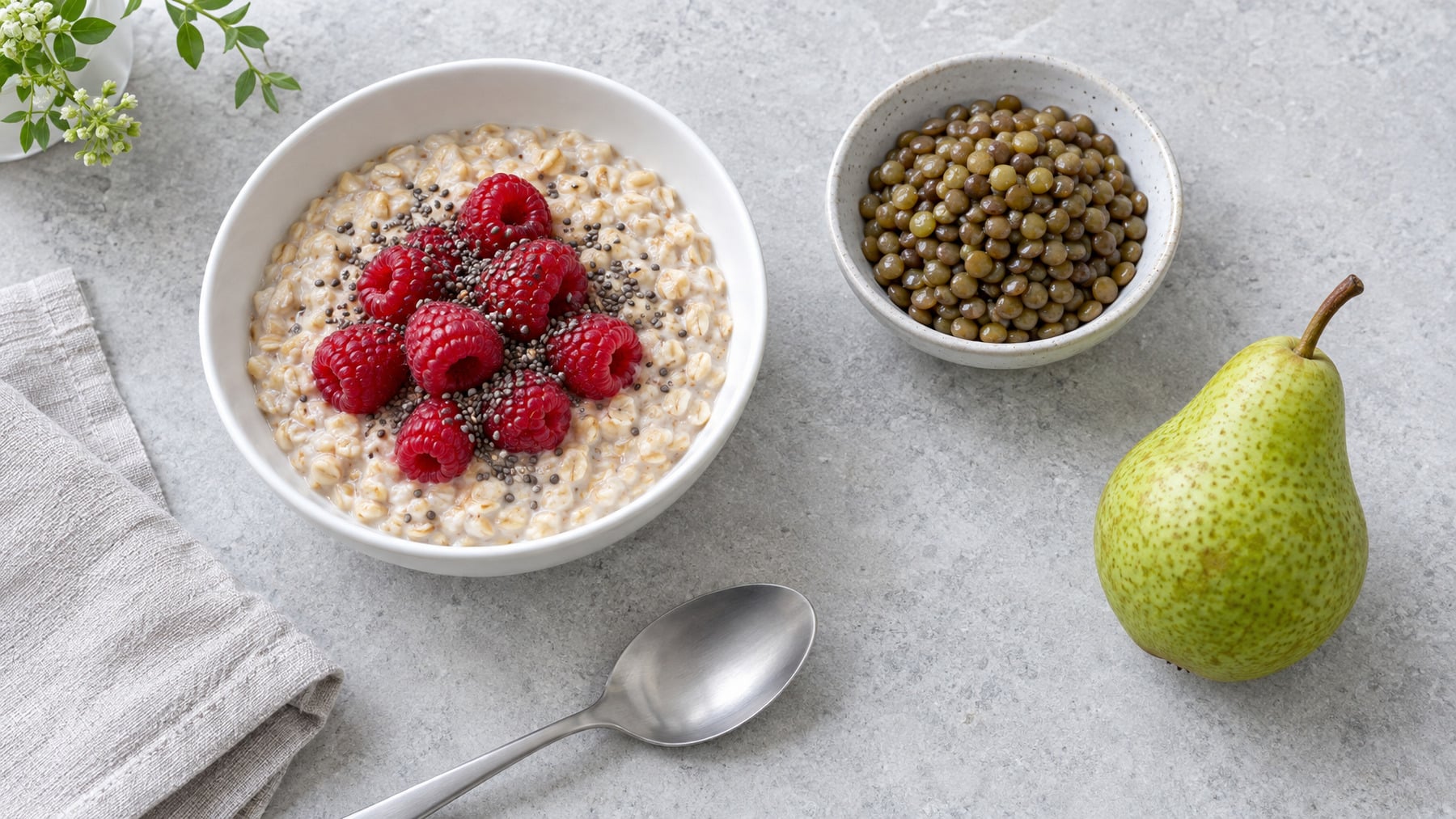
No, and I want to be clear about that, because “nature’s Ozempic” is now a marketing phrase. Fiber is not a natural Ozempic, and anyone selling it that way is overselling. But it’s the cheapest thing on your plate that pushes in the same direction, and it does a great deal besides. A large review of 185 cohort studies and 58 clinical trials found that people who ate the most fiber had 15 to 30 percent lower rates of death, heart disease, stroke, type 2 diabetes and colorectal cancer, with the biggest benefits seen at about 25 to 29 grams a day. That’s where I’d aim. Beans and lentils, oats and barley, chia and ground flax, pears, raspberries and other whole fruit, and plenty of vegetables get you there without a supplement. Add fiber gradually over a few weeks and drink enough water, or the gas and bloating will talk you out of it. If you already take a GLP-1 medicine, don’t stop it or swap it for fiber. If you’re queasy in the first days after starting or raising the dose, go lighter on bulky high-fiber meals and build back up as you settle; otherwise eat the fiber anyway, because the drug doesn’t replace the rest of a good diet. Your gut already has the factory. Fiber is how you keep the lights on.
References:
- Holst, J. J. (2007). The physiology of glucagon-like peptide 1. Physiological Reviews, 87(4), 1409-1439.
- Tolhurst, G., Heffron, H., Lam, Y. S., Parker, H. E., Habib, A. M., Diakogiannaki, E., et al. (2012). Short-chain fatty acids stimulate glucagon-like peptide-1 secretion via the G-protein-coupled receptor FFAR2. Diabetes, 61(2), 364-371.
- Cani, P. D., Lecourt, E., Dewulf, E. M., Sohet, F. M., Pachikian, B. D., Naslain, D., et al. (2009). Gut microbiota fermentation of prebiotics increases satietogenic and incretin gut peptide production with consequences for appetite sensation and glucose response after a meal. The American Journal of Clinical Nutrition, 90(5), 1236-1243.
- Chambers, E. S., Viardot, A., Psichas, A., Morrison, D. J., Murphy, K. G., Zac-Varghese, S. E., et al. (2015). Effects of targeted delivery of propionate to the human colon on appetite regulation, body weight maintenance and adiposity in overweight adults. Gut, 64(11), 1744-1754.
- Reynolds, A., Mann, J., Cummings, J., Winter, N., Mete, E., & Te Morenga, L. (2019). Carbohydrate quality and human health: A series of systematic reviews and meta-analyses. The Lancet, 393(10170), 434-445.
Comments are closed