
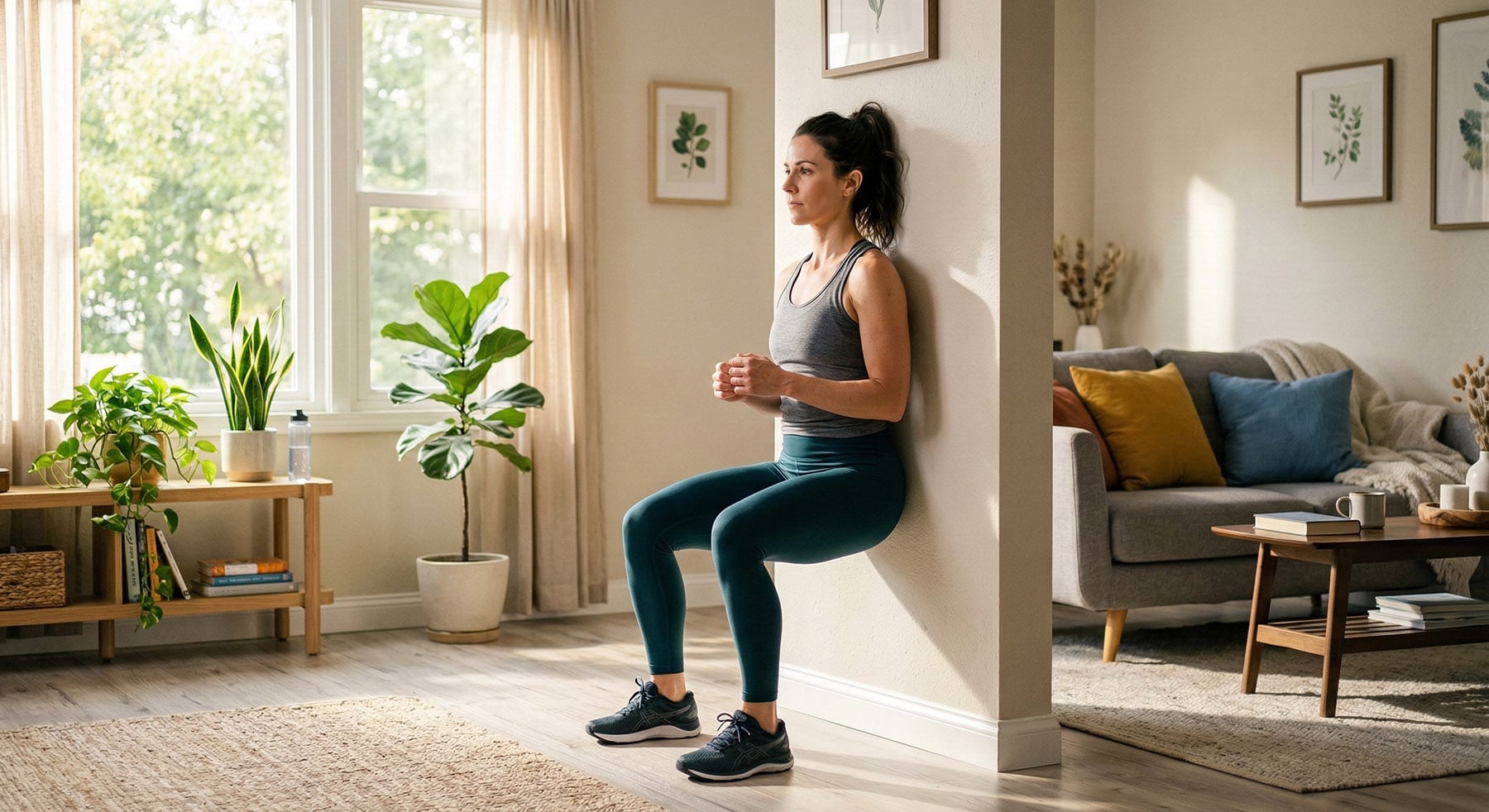
When we think about managing hypertension, the first image that usually comes to mind is breaking a sweat on a treadmill or jogging around the neighborhood. However, you absolutely do not have to jump around or engage in high-impact cardio to see significant improvements in your cardiovascular health. In fact, a robust body of modern research demonstrates that isometric exercises—static movements where your muscles contract without changing length, such as wall sits or planking—are highly effective at reducing resting blood pressure. These stationary holds trigger a unique physiological response that traditional aerobic exercise doesn’t replicate in quite the same way.
The magic of isometric training lies in what happens to your local vascular system during the actual hold. When you engage in a sustained muscle contraction like a wall sit, the intense pressure physically squeezes the blood vessels within the working tissue. This temporary restriction severely limits blood flow, creating a localized state of muscle hypoxia, meaning the tissue is briefly deprived of its normal oxygen supply. While “hypoxia” might sound alarming, this controlled, temporary stress acts as a powerful signaling mechanism, priming your cardiovascular system for the vital recovery phase that follows.
The most crucial cardiovascular benefits occur the exact moment you release the isometric hold. As the muscle relaxes, the “dam” breaks, and your body responds by sending a massive, rapid rush of blood back into the previously restricted tissue—a phenomenon known as reactive hyperemia. This sudden surge creates physical shear stress against the endothelium, the delicate inner lining of your blood vessels. This friction forces the endothelial cells to release nitric oxide, a crucial molecule that tells the blood vessels to dilate. Over time, this repeated cycle of restriction and massive dilation acts like a workout for your veins and arteries, significantly improving endothelial elasticity and leading to sustained, lower blood pressure.
References
- Edwards, J. J., Deenmamode, A. H. P., Griffiths, M., Arnold, O., Cooper, N. J., Wiles, J. D., & O’Driscoll, J. M. (2023). “Exercise training and resting blood pressure: a large-scale pairwise and network meta-analysis of randomised controlled trials.” British Journal of Sports Medicine, 57(20), 1317-1326.
- Millar, P. J., McGowan, C. L., Cornelissen, V. A., Araujo, C. G., & Swaine, I. L. (2014). “Evidence for the role of isometric exercise training in reducing blood pressure: potential mechanisms and future directions.” Sports Medicine, 44(3), 345-356.
- Green, D. J., & Smith, K. J. (2018). “Effects of Exercise on Vascular Function, Structure, and Health in Humans.” Cold Spring Harbor Perspectives in Medicine, 8(4), a029819.
Comments are closed