
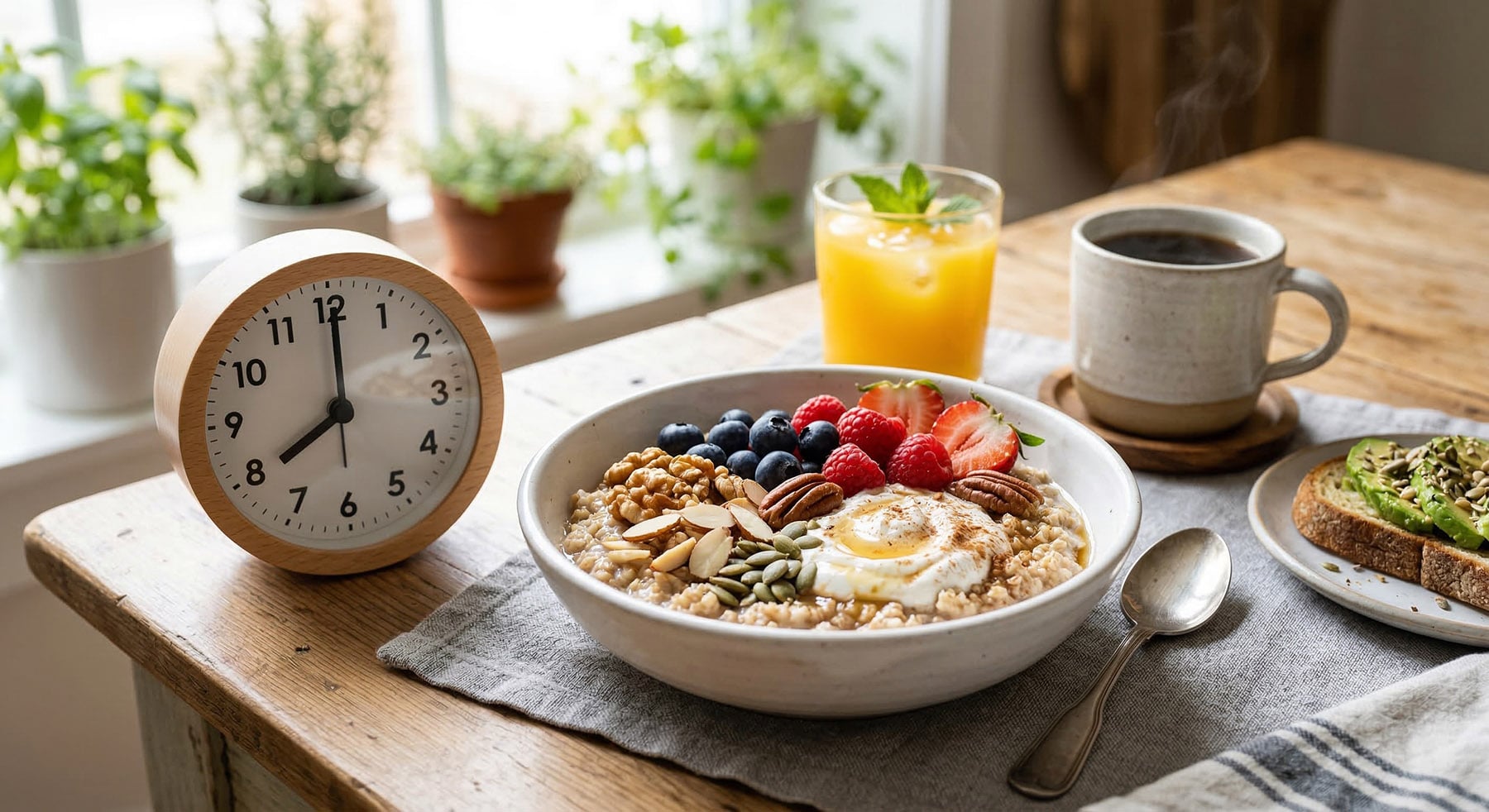
Did you know that your pancreas operates on its own internal schedule? Much like the brain regulating your sleep-wake cycles, the pancreas is governed by a biological clock—a circadian rhythm that heavily influences how your body handles food throughout the day. Scientific research demonstrates that insulin sensitivity is not static; it naturally peaks in the morning and early afternoon. During these earlier hours, your pancreatic beta cells are metabolically primed and highly responsive, releasing insulin efficiently to help your body shuttle glucose out of the bloodstream and into your muscle and liver cells for energy.
Because of this morning metabolic peak, aligning your food intake with your body’s biological clock can profoundly impact your overall health. Eating your largest, most nutrient- and carbohydrate-dense meals earlier in the day takes full advantage of your natural state of high insulin sensitivity. When you prioritize a hearty breakfast or lunch, your cells can clear glucose from the blood swiftly and effectively. This circadian alignment not only prevents drastic blood sugar spikes and crashes but also promotes sustained daytime energy levels, better appetite control, and optimal nutrient partitioning.
Conversely, consuming heavy meals late at night fundamentally works against your biology. By the evening, the pancreas begins to physiologically wind down, leading to a natural drop in both insulin secretion and cellular insulin sensitivity. When you eat late-night meals, you force a sluggish, resting pancreas to work overtime. Because the glucose cannot be cleared efficiently at this hour, it lingers in the bloodstream, triggering the body to convert and store the excess energy as visceral fat. Over time, chronic late-night eating can drive systemic inflammation, increase the risk of insulin resistance, and pave the way for metabolic syndrome.
References:
- Morris, C. J., Yang, J. N., Garcia, J. I., Myers, S., Bozzi, I., Wang, W., … & Scheer, F. A. (2015). Endogenous circadian system and circadian misalignment impact glucose tolerance via separate mechanisms in humans. Proceedings of the National Academy of Sciences, 112(17), E2225-E2234.
- Poggiogalle, E., Jamshed, H., & Peterson, C. M. (2018). Circadian regulation of glucose, lipid, and energy metabolism in humans. Metabolism: Clinical and Experimental, 84, 11-27.
- Stenvers, D. J., Scheer, F. A., Schrauwen, P., la Fleur, S. E., & Kalsbeek, A. (2019). Circadian clocks in the network of endocrine regulation. Journal of Endocrinology, 240(1), R1-R11.
Comments are closed