
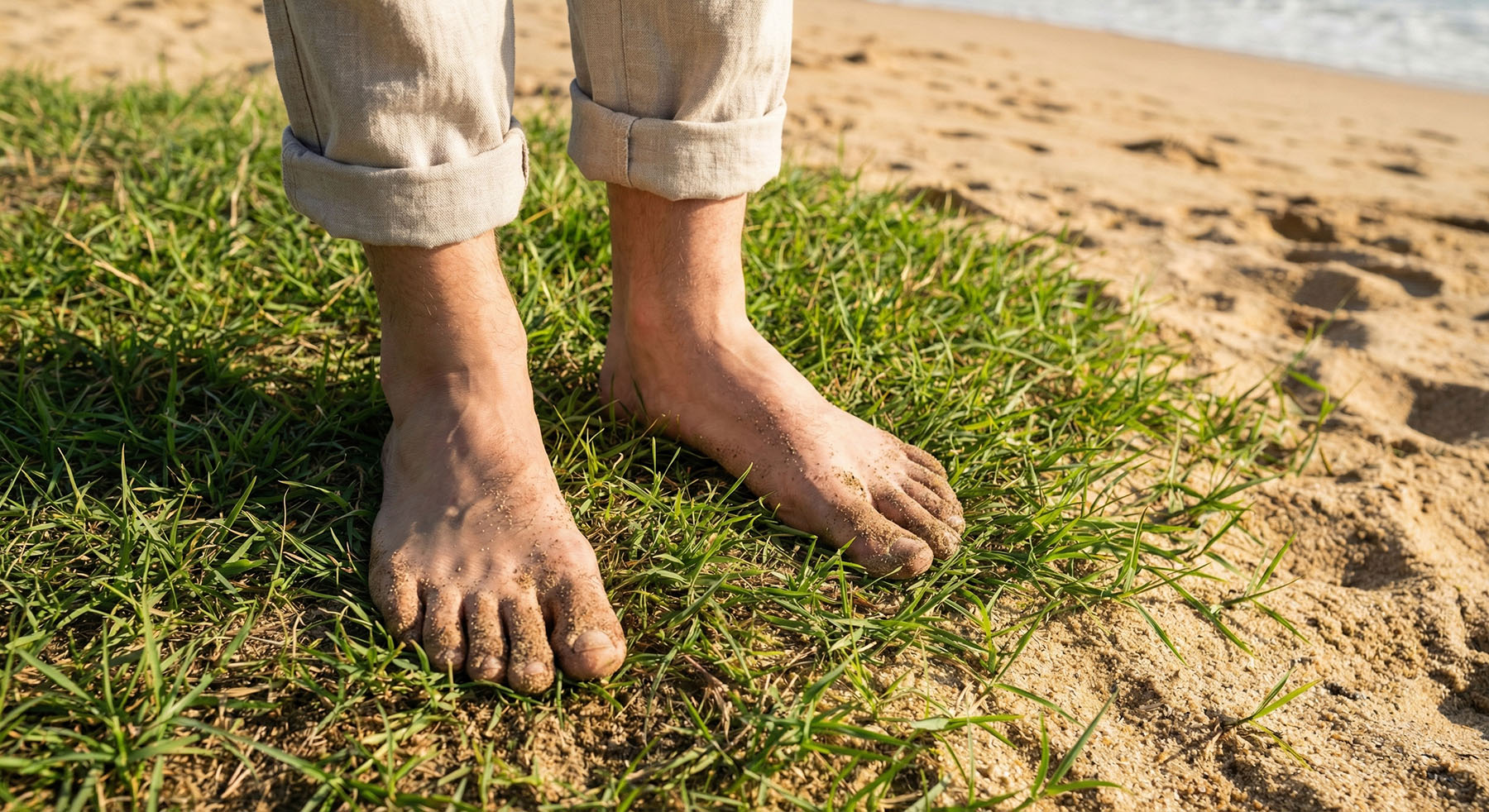
Grounding, or “earthing,” refers to the practice of making direct physical contact with the Earth’s surface electrons, typically by walking barefoot on grass, sand, or soil. While modern lifestyles effectively insulate humans from the ground through synthetic footwear and elevated living, research suggests this disconnection may contribute to physiological dysfunction. When the human body connects to the Earth, it acts as a conductor, allowing for a transfer of free electrons. This contact equalizes the body’s electrical potential with that of the Earth, a process that researchers hypothesize helps stabilize the body’s bioelectrical environment and regulate circadian rhythms (Chevalier et al., 2012).
The most significant potential benefit of grounding lies in its anti-inflammatory properties. The “free electron” hypothesis proposes that the Earth serves as a vast supply of mobile electrons that can function as natural antioxidants. When these electrons enter the body, they may neutralize positively charged reactive oxygen species (free radicals) that generate inflammation and tissue damage. Clinical reviews indicate that grounding can reduce the cardinal signs of inflammation—including redness, heat, swelling, and pain—and may even accelerate wound healing by preventing “collateral damage” to healthy tissues near injury sites (Oschman et al., 2015).
Beyond inflammation, grounding appears to play a critical role in stress reduction and autonomic nervous system balance. Studies have observed that earthing can shift the body from a sympathetic (“fight or flight”) state toward a parasympathetic (“rest and digest”) state. This shift is often accompanied by measurable physiological changes, such as improved heart rate variability, normalized muscle tension, and the regulation of cortisol, the body’s primary stress hormone. Animal models have further supported these findings, showing that grounding can significantly inhibit stress-induced anxiety behaviors and regulate neuroendocrine responses in the brain (Park et al., 2022).
References
- Chevalier, G., Sinatra, S. T., Oschman, J. L., Sokal, K., & Sokal, P. (2012). Earthing: Health implications of reconnecting the human body to the Earth’s surface electrons. Journal of Environmental and Public Health, 2012, 1–8. https://doi.org/10.1155/2012/291541
- Oschman, J. L., Chevalier, G., & Brown, R. (2015). The effects of grounding (earthing) on inflammation, the immune response, wound healing, and prevention and treatment of chronic inflammatory and autoimmune diseases. Journal of Inflammation Research, 8, 83–96. https://doi.org/10.2147/jir.s69656
- Park, H.-J., Jeong, W., Yu, H. J., Ye, M., Hong, Y., Kim, M., Kim, J. Y., & Shim, I. (2022). The effect of earthing mat on stress-induced anxiety-like behavior and neuroendocrine changes in the rat. Biomedicines, 11(1), 57. https://doi.org/10.3390/biomedicines11010057
Comments are closed