
Summer ultraviolet exposure peaks between roughly ten in the morning and four in the afternoon, and the damage it does to skin is not cosmetic but molecular. UVA radiation, the longer wavelength, penetrates deep into the dermis where it generates reactive oxygen species that activate matrix metalloproteinases, the enzymes that cleave collagen and elastin fibers. The visible result over decades is sagging, leathering, and the characteristic crepe-paper texture of chronically exposed skin. UVB radiation, the shorter and more energetic wavelength, is absorbed directly by keratinocyte DNA, forming pyrimidine dimers that, when poorly repaired, become the mutations that seed actinic keratoses and squamous cell carcinomas.
Sunscreen choice matters because the two wavelengths behave differently. Mineral filters using zinc oxide and titanium dioxide sit on the stratum corneum and physically reflect and scatter both UVA and UVB across a broad spectrum, with very low rates of contact sensitivity. Chemical filters absorb UV and dissipate it as heat; they are effective when the filter set is broad-spectrum and reapplied. The single most important label feature is “broad spectrum SPF 30 or higher.” A randomized trial in adults followed for four and a half years found that daily broad-spectrum sunscreen use slowed measurable photoaging by twenty-four percent compared with discretionary use, the first hard human evidence that sunscreen prevents wrinkling, not just burns.
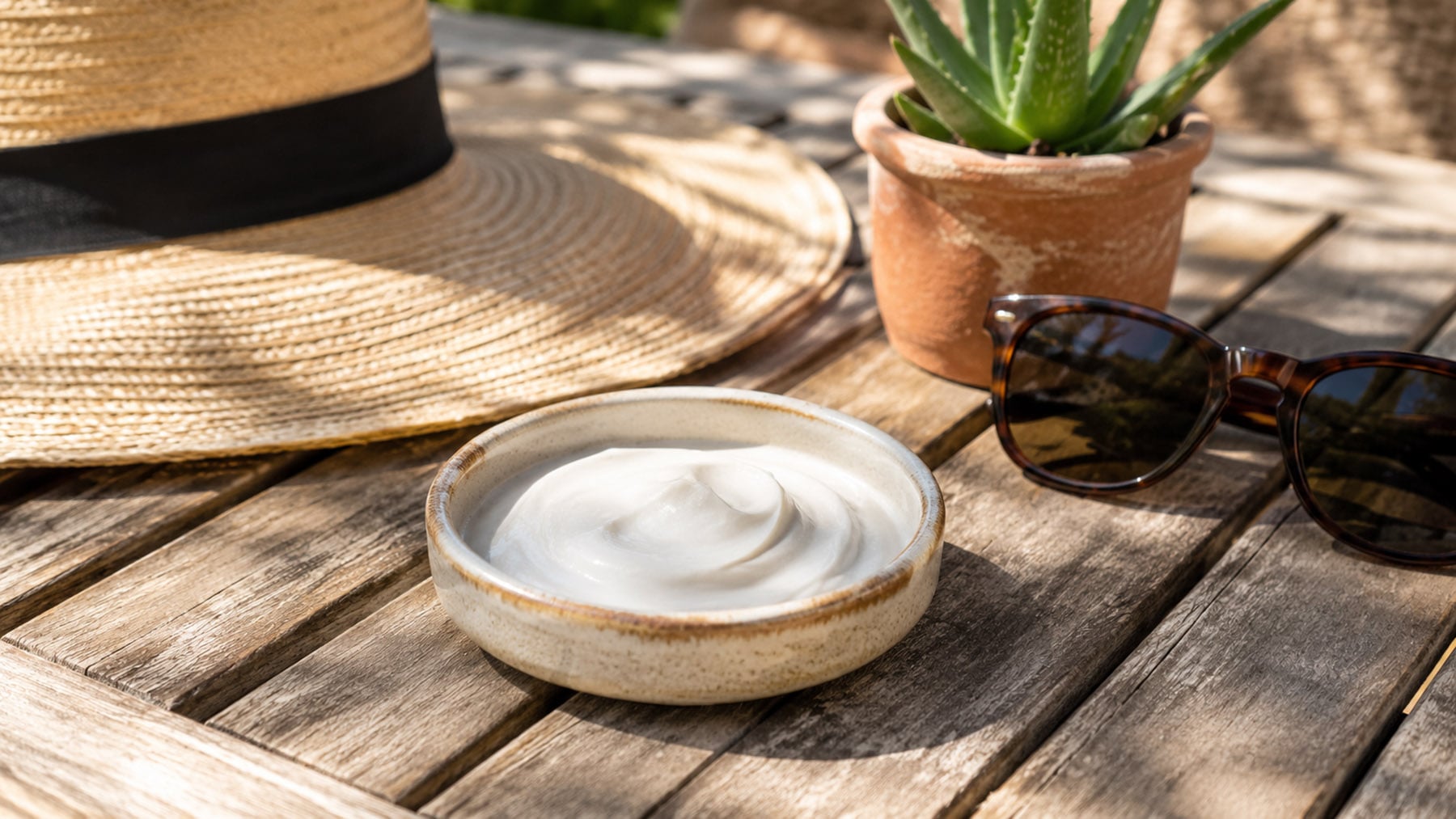
The real anti-aging regimen is therefore simpler and cheaper than any serum on the shelf. A broad-spectrum SPF 30 mineral sunscreen applied to the face, neck, and backs of the hands each morning, a wide-brimmed hat for outdoor work, sunglasses that block UV, and the habit of seeking shade between ten and four does more to preserve collagen than every retinoid and antioxidant cream combined. Photoprotection is the foundation; everything else is an adjunct. The patients who look fifteen years younger than their age in their seventies almost always share one boring habit, which is that they have been wearing sunscreen daily since their thirties.
References:
- Hughes, M. C., Williams, G. M., Baker, P., & Green, A. C. (2013). Sunscreen and prevention of skin aging: A randomized trial. Annals of Internal Medicine, 158(11), 781-790.
- Brar, G., Dhaliwal, A., Brar, A. S., Sreedevi, M., Ahmadi, Y., & Irfan, M. (2025). A comprehensive review of the role of UV radiation in photoaging processes between different types of skin. Cureus, 17(3), e81109.
- Pedić, L., Pondeljak, N., & Šitum, M. (2020). Recent information on photoaging mechanisms and the preventive role of topical sunscreen products. Acta Dermatovenerologica Alpina, Pannonica, et Adriatica, 29(4), 201-207.
Comments are closed