
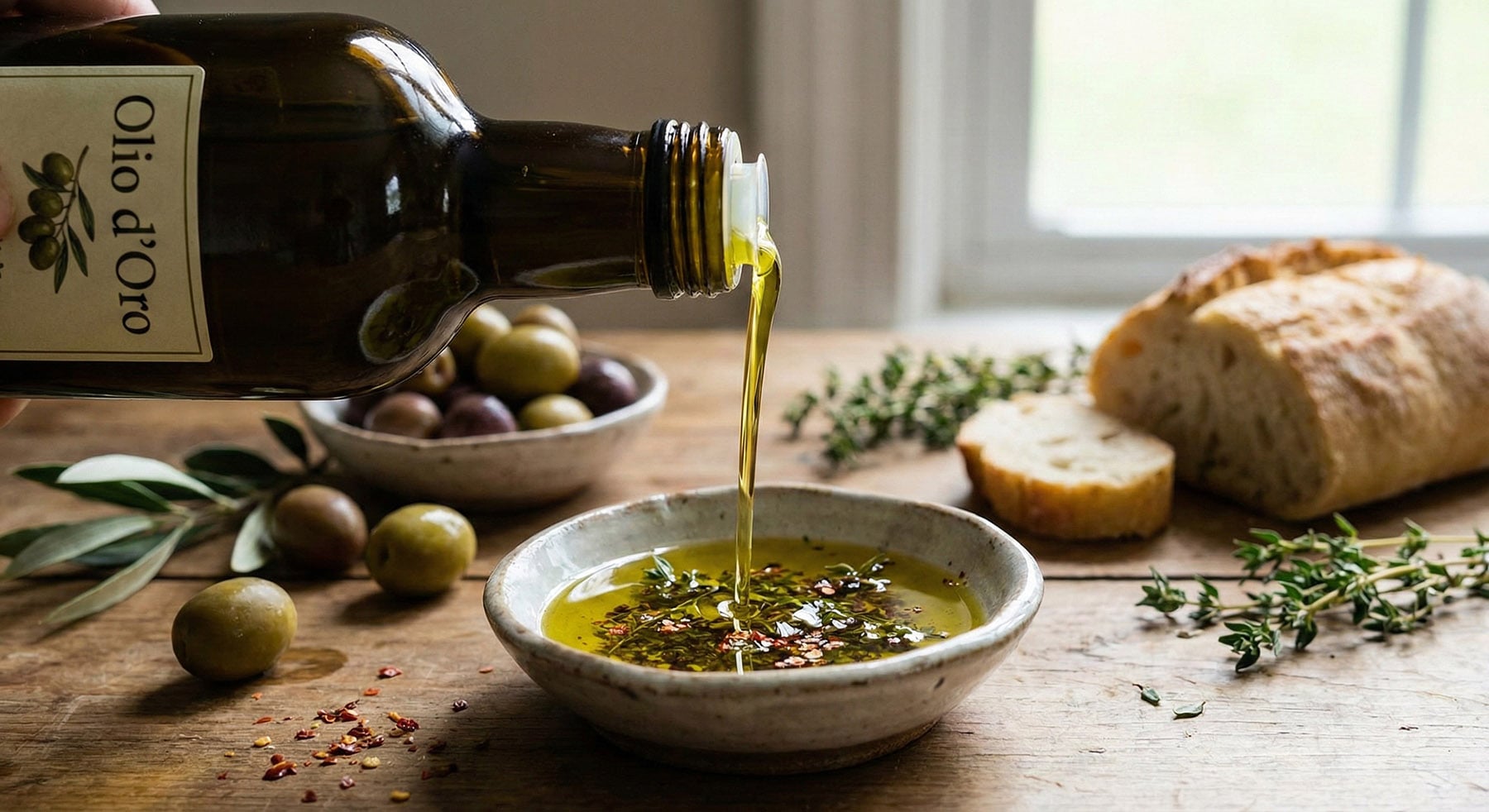
The signature peppery “sting” you feel in the back of your throat when swallowing high-quality Extra Virgin Olive Oil (EVOO) is more than just a flavor profile—it is the biological marker of oleocanthal. In 2005, researchers made a breakthrough discovery that this specific phenolic compound acts as a potent natural anti-inflammatory agent. Much like the non-steroidal anti-inflammatory drug (NSAID) ibuprofen, oleocanthal inhibits the cyclooxygenase enzymes (COX-1 and COX-2) responsible for causing inflammation and pain in the body. Although structurally different from ibuprofen, oleocanthal mimics its pharmacological activity so closely that approximately 50g (about 3.5 tablespoons) of premium EVOO corresponds to about 10% of the adult dosage of ibuprofen, providing a safe, low-level anti-inflammatory maintenance dose over the long term [1].
To harness the full therapeutic potential of oleocanthal, proper storage and handling are critical. While oleocanthal is moderately resistant to degradation compared to other phenols, studies indicate that its biological activity—its ability to actually inhibit inflammation—diminishes significantly upon exposure to heat and light. Research shows that while the chemical concentration may remain stable during short heating, the functional potency (measured by the throat-stinging bioassay) can drop by nearly a third after heating. Therefore, to protect this delicate compound, it is essential to purchase EVOO in dark glass or tin containers that block photo-oxidation and to store them in a cool environment away from the stove [2].
Integrating high-phenolic EVOO into your daily diet is one of the most effective nutritional strategies for cardiovascular protection. The chronic, low-grade inflammation that oleocanthal targets is a primary driver of atherosclerosis (hardening of the arteries). By liberally applying EVOO as a “finishing” oil on salads, vegetables, or soups after cooking, you preserve the integrity of the oil while directly supporting endothelial function—the health of the inner lining of your blood vessels. This dietary habit aligns with findings from major clinical trials, such as the PREDIMED study, which linked consistent EVOO consumption to a marked reduction in major cardiovascular events [3, 4].
References
- Beauchamp, G. K., Keast, R. S., Morel, D., et al. (2005). Phytochemistry: Ibuprofen-like activity in extra-virgin olive oil. Nature, 437(7055), 45-46.
- Cicerale, S., Conlan, X. A., Sinclair, A. J., & Keast, R. S. (2009). Influence of heat on biological activity and concentration of oleocanthal—a natural anti-inflammatory agent in virgin olive oil. Journal of Agricultural and Food Chemistry, 57(4), 1326-1330.
- Parkinson, L., & Keast, R. (2014). Oleocanthal, a phenolic derived from virgin olive oil: a review of the beneficial effects on inflammatory disease. International Journal of Molecular Sciences, 15(7), 12323-12334.
- Estruch, R., Ros, E., Salas-Salvadó, J., et al. (2013). Primary prevention of cardiovascular disease with a Mediterranean diet. New England Journal of Medicine, 368(14), 1279-1290.
Comments are closed