
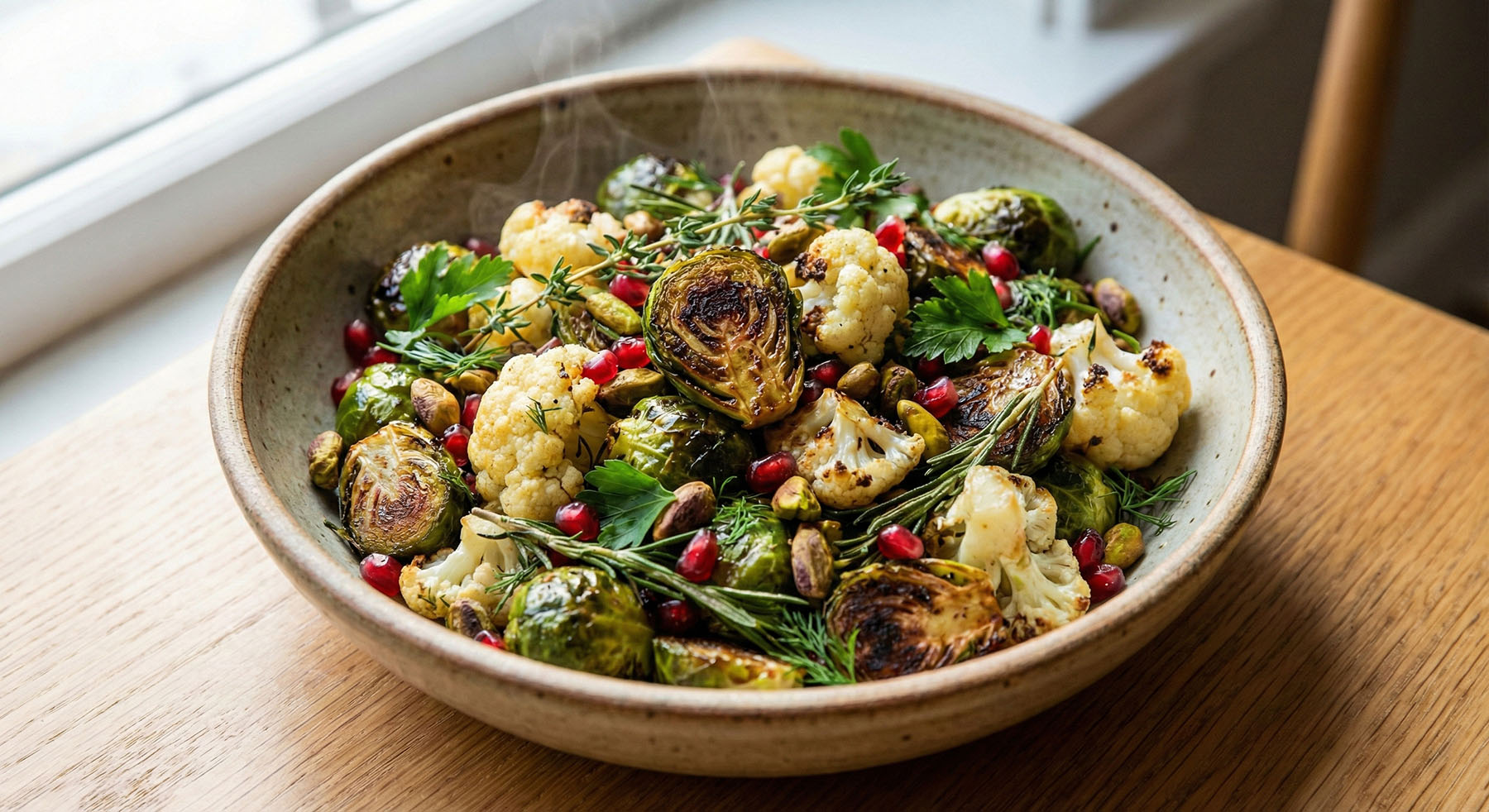
Cruciferous vegetables like broccoli, cauliflower, and Brussels sprouts are powerful functional foods, largely due to their high content of glucosinolates. When these vegetables are chopped, chewed, or lightly cooked, an enzyme called myrosinase converts these compounds into indole-3-carbinol (I3C), which digests further in the stomach to form 3,3′-diindolylmethane (DIM). DIM has gained significant scientific attention for its ability to modulate the body’s detoxification pathways, acting as a potent bioactive agent rather than just a simple nutrient [1, 5].
The primary benefit of DIM lies in its specific influence on estrogen metabolism. It promotes the hydroxylation of estrogen into 2-hydroxyestrone—a “clean” metabolite that is easily eliminated—while inhibiting the production of 16-alpha-hydroxyestrone, a potent metabolite associated with tissue proliferation and increased cancer risk. This shift in the estrogen ratio is vital for both genders: in women, it supports breast and cervical health by reducing “estrogen dominance,” while in men, it helps maintain a healthy testosterone-to-estrogen balance, which is critical for prostate health [2, 4].
To maximize these benefits, the cooking method is essential. Glucosinolates are water-soluble and heat-sensitive; boiling can leach up to 90% of these compounds into the cooking water. Furthermore, high heat destroys the myrosinase enzyme required to activate them. Research indicates that steaming these vegetables lightly—just until tender-crisp—preserves significantly more glucosinolates and myrosinase activity compared to boiling, ensuring the body can effectively produce DIM and absorb these protective nutrients [3, 5].
References
- Thomson, C. A., et al. (2016). “Ligand-independent activation of the estrogen receptor by 3,3′-diindolylmethane in human breast cancer cells.” Nutrition and Cancer, 68(1), 126–135.
- Rajoria, S., et al. (2011). “3,3′-Diindolylmethane modulates estrogen metabolism in patients with thyroid proliferative disease: a pilot study.” Thyroid, 21(3), 299–304.
- Yuan, G. F., et al. (2009). “Effects of different cooking methods on health-promoting compounds of broccoli.” Journal of Zhejiang University Science B, 10(8), 580–588.
- Hwang, J. H., et al. (2016). “Anti-androgenic activity of absorption-enhanced 3, 3′-diindolylmethane in prostatectomy patients.” American Journal of Translational Research, 8(1), 166–176.
- Higdon, J. V., et al. (2007). “Cruciferous vegetables and human cancer risk: epidemiologic evidence and mechanistic basis.” Pharmacological Research, 55(3), 224–236.
Comments are closed