
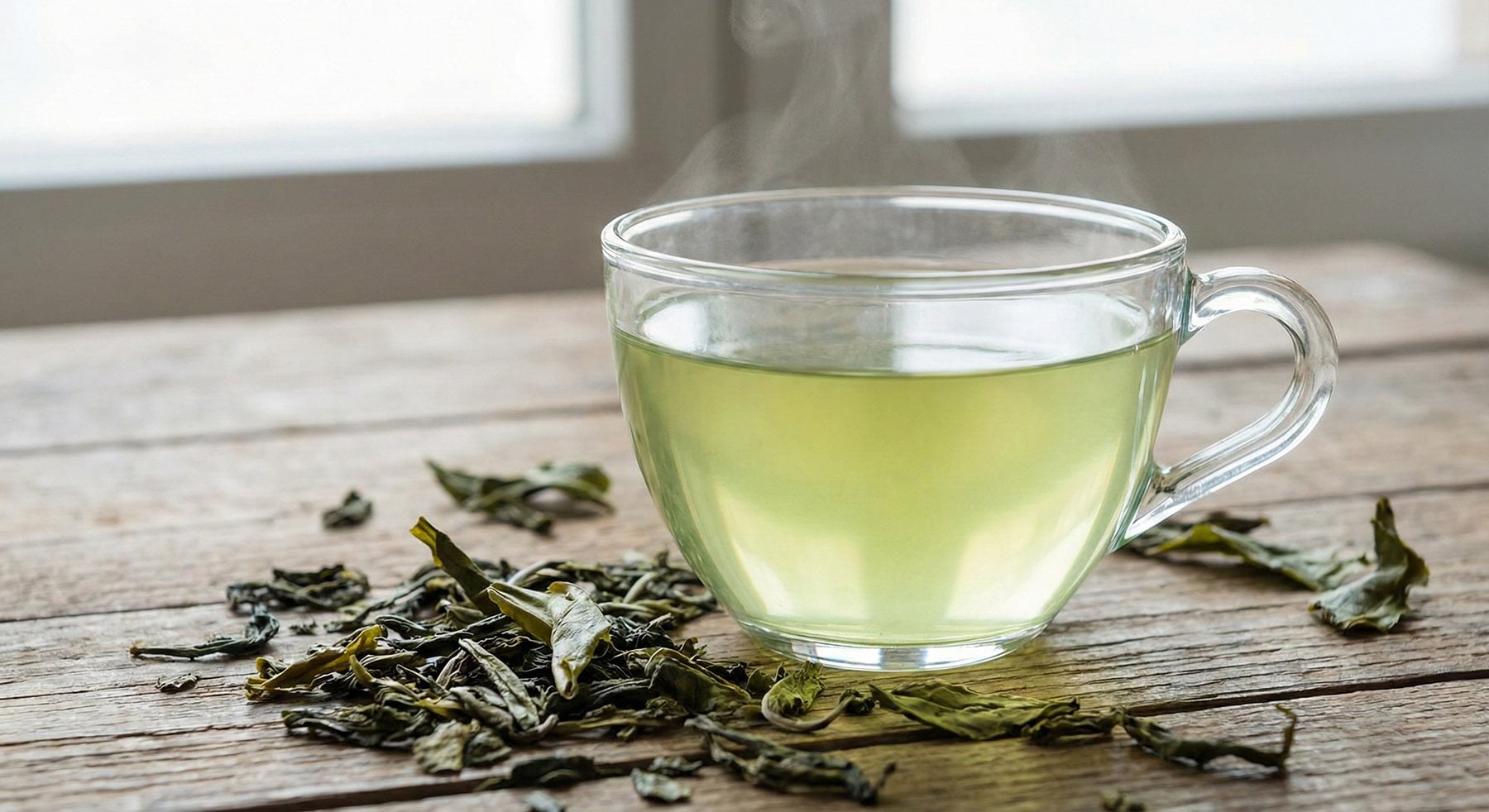
Green tea isn’t just a soothing drink; it’s a biochemical powerhouse heavily researched for its physical benefits. The star of the show is Epigallocatechin gallate (EGCG), a potent catechin and antioxidant abundant in the leaves. Research shows that EGCG actively improves endothelial function, meaning it helps your blood vessels dilate and keeps your arteries flexible for optimal blood flow. Beyond cardiovascular health, EGCG has been widely studied for its ability to enhance fat oxidation, effectively supporting your body’s natural metabolic processes and energy expenditure.
While coffee relies almost entirely on a heavy dose of caffeine to jolt you awake, green tea offers a much more refined chemical profile. It contains L-theanine, an amino acid that readily crosses the blood-brain barrier to increase the production of alpha brain waves, which are associated with deep relaxation. When L-theanine pairs with green tea’s moderate caffeine content, the two compounds work synergistically. The L-theanine blunts the harsh, jittery spike and subsequent crash typically associated with coffee, instead fostering a highly functional state of “calm alertness.”
This specific combination of metabolic support and focused tranquility makes green tea the perfect antidote to the dreaded mid-afternoon slump. Reaching for a heavy cup of coffee at 3:00 PM often leads to residual caffeine in your system that disrupts your sleep architecture later that night. In contrast, green tea delivers a smooth, sustained lift that helps you power through the rest of your workday, leaving your mind incredibly sharp while keeping your nervous system completely relaxed.
References
- Alexopoulos, N., et al. (2008). “The acute effect of green tea consumption on endothelial function in healthy individuals.” European Journal of Cardiovascular Prevention & Rehabilitation, 15(3), 300-305.
- Venables, M. C., et al. (2008). “Green tea extract ingestion, fat oxidation, and glucose tolerance in healthy humans.” The American Journal of Clinical Nutrition, 87(3), 778-784.
- Nobre, A. C., et al. (2008). “L-theanine, a natural constituent in tea, and its effect on mental state.” Asia Pacific Journal of Clinical Nutrition, 17(S1), 167-168.
Comments are closed