The modern lifestyle involves prolonged periods of sitting, whether at a desk, in a car, or on the couch. This sedentary behavior places the psoas major—the deepest muscle in the human body, bridging the spine to the legs—in a chronically shortened position. Because the psoas attaches to the thoracic and lumbar vertebrae as well as the femur, its shortening pulls the lower spine forward, often causing an anterior pelvic tilt and lumbar compression. This creates a mechanical imbalance that does more than generate lower back pain; it physically mimics the fetal position or the crouch of a defensive stance, creating structural tension that the body must constantly compensate for.
This mechanical stress has profound neurological implications. The psoas is intimately connected to the diaphragm through fascial and distinct ligamentous connections. When the psoas is tight, it can restrict the movement of the diaphragm, leading to shallow, chest-based breathing. This breathing pattern signals the amygdala to activate the Sympathetic Nervous System (SNS)—the body’s “fight-or-flight” response. Essentially, a tight psoas sends a constant, low-grade distress signal to the brain, suggesting that the body is under threat and needs to be prepared to run or fight, thereby elevating cortisol levels and inducing anxiety even in the absence of external stressors.
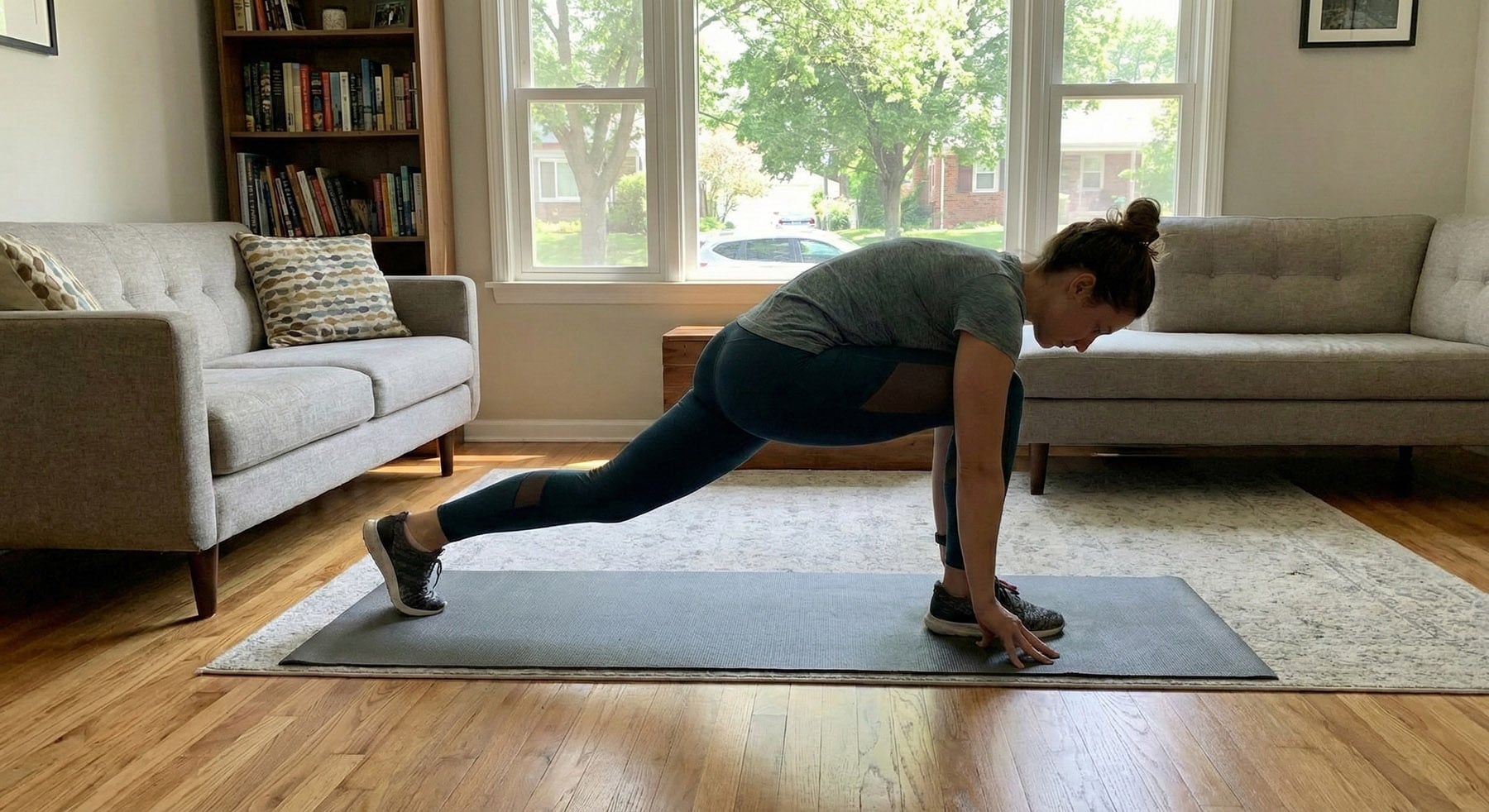
Reversing this process requires more than simple stretching for flexibility; it is a somatic intervention for mental well-being. By lengthening and releasing the psoas, we allow the hips to return to a neutral alignment and, crucially, free the diaphragm to move through its full range of motion. Deep, diaphragmatic breathing stimulates the Vagus nerve, which down-regulates the nervous system, shifting the body out of the sympathetic state and into the Parasympathetic Nervous System (PNS). This “rest and digest” state facilitates physiological recovery, lowers heart rate, and fosters a sense of safety and calm, proving that hip mobility is a gateway to emotional regulation.
References
- Sajko, S. & Stuber, K. (2009). Psoas Major: A case report and review of its anatomy, biomechanics, and clinical implications. This review highlights the anatomical complexity of the psoas and its direct influence on lumbar spine mechanics and pelvic stability.
- Bordoni, B. & Zanier, E. (2013). Anatomic connections of the diaphragm: influence of respiration on the body system. This study details the fascial and structural continuity between the diaphragm and the psoas, supporting the link between hip tightness, breathing mechanics, and autonomic regulation.
- Nair, S., Sagar, M., Sollers, J., et al. (2015). Do slumped and upright postures affect stress responses? A randomized trial. This research provides evidence that contracted, slumped postures (often associated with tight hip flexors) result in negative affect and higher stress responses compared to open, upright postures.
Comments are closed