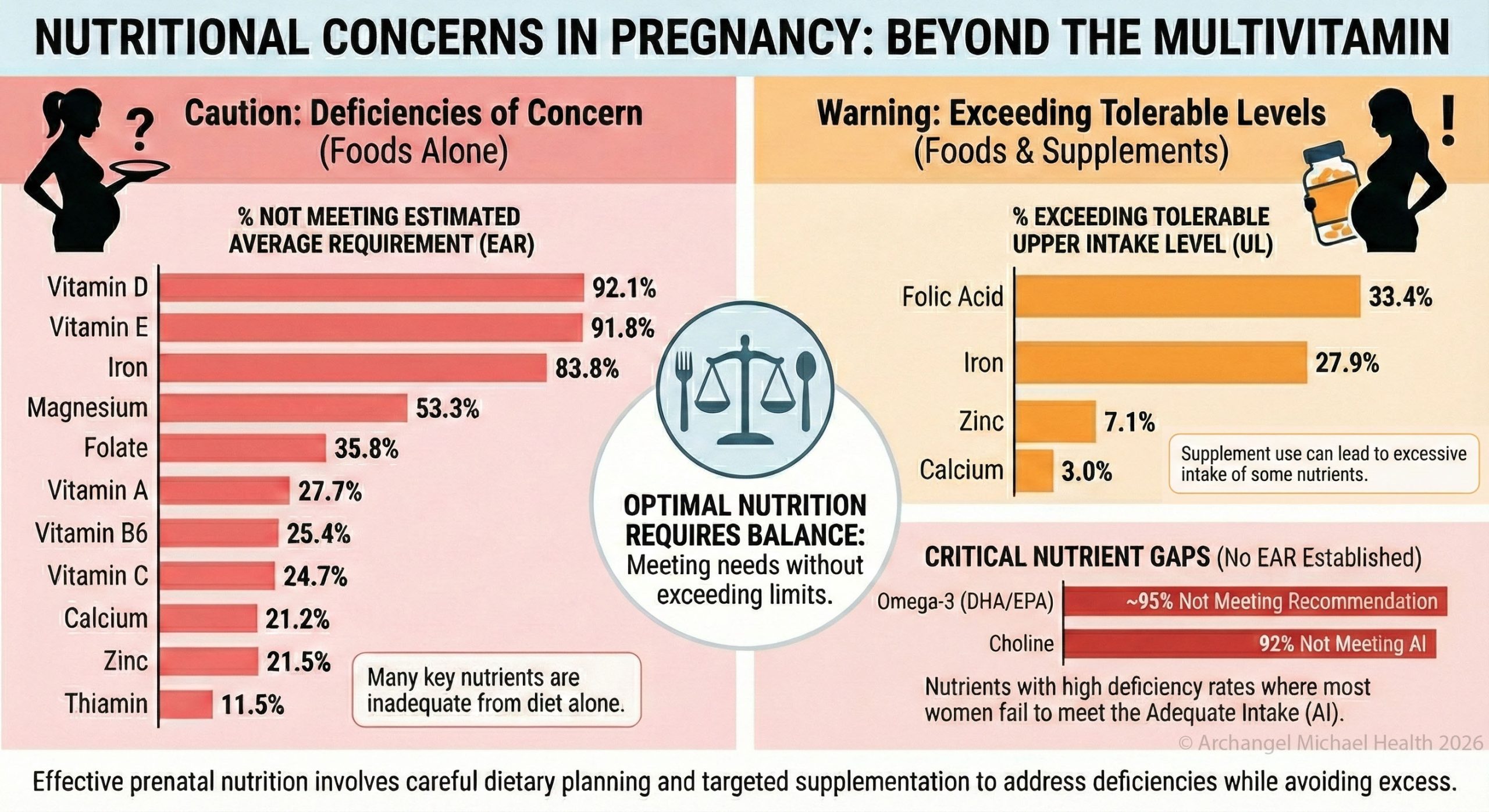
When we think of prenatal nutrition, folate is often the first nutrient that comes to mind, yet recent research paints a more complex picture of dietary adequacy during pregnancy. A nationally representative study found that when relying on food alone, a staggering percentage of pregnant women are falling short of the Estimated Average Requirement (EAR) for critical nutrients: 92% are low in Vitamin D, 92% in Vitamin E, 84% in Iron, and 53% in Magnesium. While prenatal vitamins are essential for filling these gaps, they can be a double-edged sword. The same data reveals that supplement use pushes about one-third of women above the Tolerable Upper Intake Level (UL) for folic acid and over a quarter above the limit for iron, highlighting the need for a more targeted approach to supplementation rather than a “more is better” philosophy.
Before reaching for the pill bottle, a “food-first” approach can act as a powerful buffer against these deficiencies while minimizing the risk of synthetic overdose. To combat the high rates of deficiency, incorporate specific whole foods and lifestyle habits. For Vitamin D—a nearly universal gap—prioritize safe sun exposure (a critical lifestyle factor) and consume fatty fish like salmon or fortified dairy products. To address Iron deficiency, focus on heme-iron sources like grass-fed beef or organ meats, which are more easily absorbed than plant sources. Boost your Magnesium intake with dark leafy greens, pumpkin seeds, and almonds, and increase Vitamin E by snacking on sunflower seeds or hazelnuts. Additionally, pay attention to Choline; with only ~8% of pregnant women meeting the adequate intake, adding eggs (specifically the yolks) to your diet is a vital strategy for fetal brain development.
While whole foods are the foundation, the high metabolic demands of pregnancy often make it difficult to meet all nutrient needs through diet alone. For instance, meeting the iron recommendation solely through food is challenging for the majority of women. The goal is to choose a high-quality prenatal supplement that acts as an insurance policy rather than a megadose. Look for formulations that provide necessary amounts of Vitamin D, Choline, and Magnesium—nutrients largely missing from standard diets—without providing excessive amounts of nutrients where toxicity or adverse effects are a concern, such as synthetic folic acid or iron, if your levels are already sufficient. Tailoring your intake helps you meet recommendations for fetal development without crossing into the zone of potential excess.
References
- Bailey RL, Pac SG, Fulgoni VL 3rd, Reidy KC, Catalano PM. Estimation of Total Usual Dietary Intakes of Pregnant Women in the United States. JAMA Network Open. 2019;2(6):e195967. doi:10.1001/jamanetworkopen.2019.5967
Comments are closed