
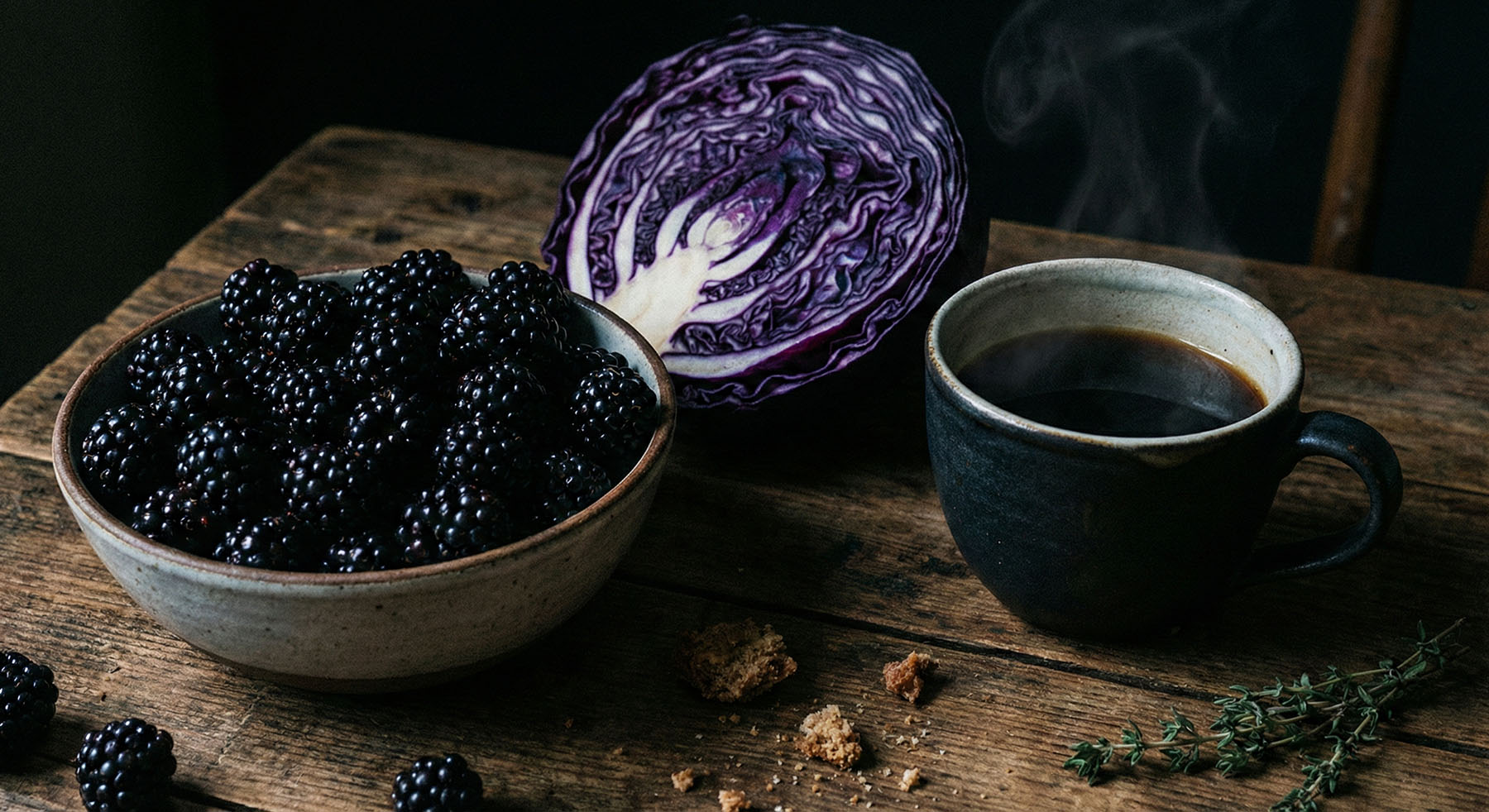
Polyphenols are a diverse group of naturally occurring compounds responsible for the deep reds, purples, and blues seen in plants, acting as powerful prebiotics for the human host. While often touted for their antioxidant properties, their most significant impact may actually occur in the large intestine. Research indicates that a vast majority of dietary polyphenols—approximately 90-95%—are not absorbed in the small intestine but instead pass intact to the colon [1]. Once there, they undergo biotransformation by the resident microbiota, effectively serving as “rocket fuel” that selectively stimulates the growth of beneficial bacterial strains while simultaneously inhibiting pathogenic ones.
One of the primary beneficiaries of a polyphenol-rich diet is Akkermansia muciniphila, a keystone bacterium associated with metabolic health and a strong gut barrier. Akkermansia resides in the mucus layer of the gut lining, where it plays a critical role in maintaining intestinal integrity and reducing systemic inflammation. Studies have demonstrated that specific polyphenols, such as those found in cranberries and Concord grapes, can dramatically increase the abundance of Akkermansia—in some cases by several fold [2, 3]. These compounds appear to promote Akkermansia colonization through multiple mechanisms, including the reduction of oxidative stress in the gut environment and the stimulation of mucin production, which provides the bacterium with its preferred energy source [4].
To maximize these benefits, the “eat the rainbow” advice should be refined to “focus on the dark spectrum.” The pigmentation of a fruit or vegetable is often a direct visual indicator of its polyphenol density; specifically, anthocyanins are the pigments responsible for black, blue, and purple hues and are potent drivers of microbiome diversity. High-value targets include blackberries, black chokeberries (aronia), black rice, dark chocolate (at least 70% cocoa), and purple cabbage. Integrating these naturally pigmented foods provides a direct dietary strategy to nurture Akkermansia populations, thereby supporting metabolic regulation and strengthening the gut barrier against modern dietary stressors [5].
References
- Cardona, F., Andrés-Lacueva, C., Tulipani, S., Tinahones, F. J., & Queipo-Ortuño, M. I. (2013). Benefits of polyphenols on gut microbiota and implications in human health. The Journal of Nutritional Biochemistry, 24(8), 1415–1422.
- Roopchand, D. E., Carmody, R. N., Kuhn, P., Moskal, K., Rojas-Silva, P., Turnbaugh, P. J., & Raskin, I. (2015). Dietary Polyphenols Promote Growth of the Gut Bacterium Akkermansia muciniphila and Attenuate High-Fat Diet-Induced Metabolic Syndrome. Diabetes, 64(8), 2847–2858.
- Anhê, F. F., Roy, D., Pilon, G., Dudonné, S., Matamoros, S., Varin, T. V., … & Marette, A. (2015). A polyphenol-rich cranberry extract protects from diet-induced obesity, insulin resistance and intestinal inflammation in association with increased Akkermansia spp. population in the gut microbiota of mice. Gut, 64(6), 872-883.
- Ojo, O., Feng, Q. Q., Ojo, O. O., & Wang, X. (2020). The Role of Dietary Polyphenols in the Modulation of the Gut Microbiota. Nutrients, 12(11), 3502.
- Zhou, K., & Wang, Y. (2024). Dietary Polyphenols Support Akkermansia muciniphila Growth via Mediation of the Gastrointestinal Redox Environment. Antioxidants, 13(3), 304.
Comments are closed