
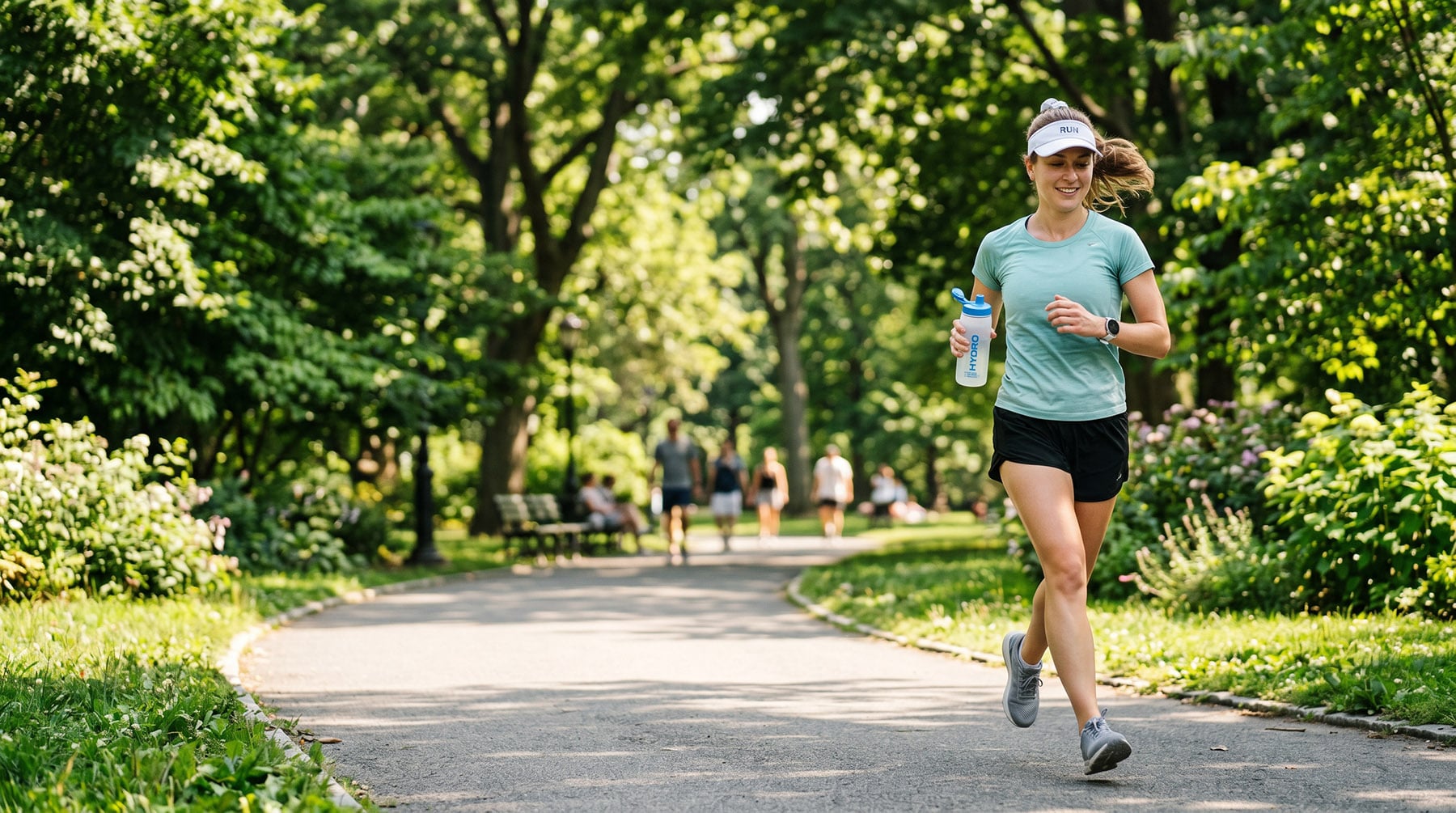
As temperatures climb across the Sunbelt, an under-recognized cardiovascular intervention becomes available for free: deliberate heat acclimation. The body’s response to repeated heat exposure is one of the most rapid and well-characterized adaptations in human physiology. Within a few days of consistent exercise in warm conditions, plasma volume expands by ten to twelve percent as the kidneys retain sodium and water in response to elevated aldosterone and vasopressin. The expanded plasma volume lowers resting heart rate at any given workload, improves stroke volume, reduces perceived exertion, and meaningfully improves performance even when the subsequent event is held in cool conditions.
The mechanism extends well beyond a fluid shift. Nielsen and colleagues, in classical work on the heat-acclimated human, demonstrated reductions in core temperature, skin temperature, and heart rate during standardized exercise after roughly nine days of progressive heat exposure. Taylor’s review of eccrine sweat-gland adaptation showed that the gland itself becomes more efficient, secreting sweat earlier, at higher rates, and with lower sodium concentration, conserving electrolytes while preserving evaporative cooling capacity. More recently, Parsons and colleagues showed that pairing heat acclimation with exercise produced measurable improvements in orthostatic tolerance — meaning the same adaptation that helps athletes also helps patients with postural intolerance, post-viral autonomic syndromes, and reduced exercise capacity in warm weather.
The practical protocol does not require a sauna or a heat chamber. Five to seven consecutive days of moderate aerobic exercise at progressively warmer ambient temperatures, accumulating roughly sixty to ninety minutes of total heat exposure per session and ending with sufficient hydration and an electrolyte replacement, is sufficient to drive most of the adaptation in a typical adult. Sodium intake should rise modestly during the acclimation window because plasma-volume expansion is sodium-dependent. Cardiovascular patients on diuretics, elderly adults, and anyone with a history of heat illness should ramp more gradually and monitor body weight, urine color, and resting heart rate as feedback. Once acclimated, the body operates with substantially greater cardiovascular reserve through the hot months. The investment is short and the benefit lasts the season.
References:
- Nielsen, B., Hales, J. R., Strange, S., Christensen, N. J., Warberg, J., & Saltin, B. (1993). Human circulatory and thermoregulatory adaptations with heat acclimation and exercise in a hot, dry environment. The Journal of Physiology, 460, 467-485.
- Taylor, N. A. (1986). Eccrine sweat glands: Adaptations to physical training and heat acclimation. Sports Medicine, 3(6), 387-397.
- Parsons, I. T., Snape, D., Stacey, M. J., Barlow, M., O’Hara, J., Gall, N., et al. (2024). Improvements in orthostatic tolerance with exercise are augmented by heat acclimation: A randomized controlled trial. Medicine and Science in Sports and Exercise, 56(4), 644-654.
Comments are closed