Last month was High Blood Pressure Awareness Month, and one of the cleanest dietary intervention studies in modern cardiovascular medicine remains the original DASH trial. Healthy and hypertensive adults randomized to a diet emphasizing fruits, vegetables, whole grains, low-fat dairy, lean protein, and minimal added sugar and sodium achieved an average eleven-millimeter systolic and six-millimeter diastolic reduction in blood pressure within eight weeks. The effect size approached that of a first-line antihypertensive medication, accomplished with food alone, without weight loss as a confound, and reproduced repeatedly across DASH-Sodium and OmniHeart variations. Three decades later, the DASH pattern remains the dietary intervention with the strongest evidence for blood pressure reduction.
The mechanism is multi-nutrient rather than single-nutrient. Potassium, magnesium, and calcium delivered through produce and dairy each independently relax vascular smooth muscle and improve renal sodium excretion. Dietary fiber improves endothelial function and feeds short-chain-fatty-acid-producing microbiota that modulate sympathetic tone. The reduction in saturated fat lowers LDL and improves endothelial nitric oxide bioavailability. Reduction in sodium attenuates fluid retention and direct vascular smooth muscle stimulation. The therapeutic dose, from the original protocol, is eight to ten servings of fruits and vegetables daily—a number most American patients will hear with surprise. That density, sustained, is what produces the eleven-millimeter effect; smaller doses produce proportionally smaller effects.
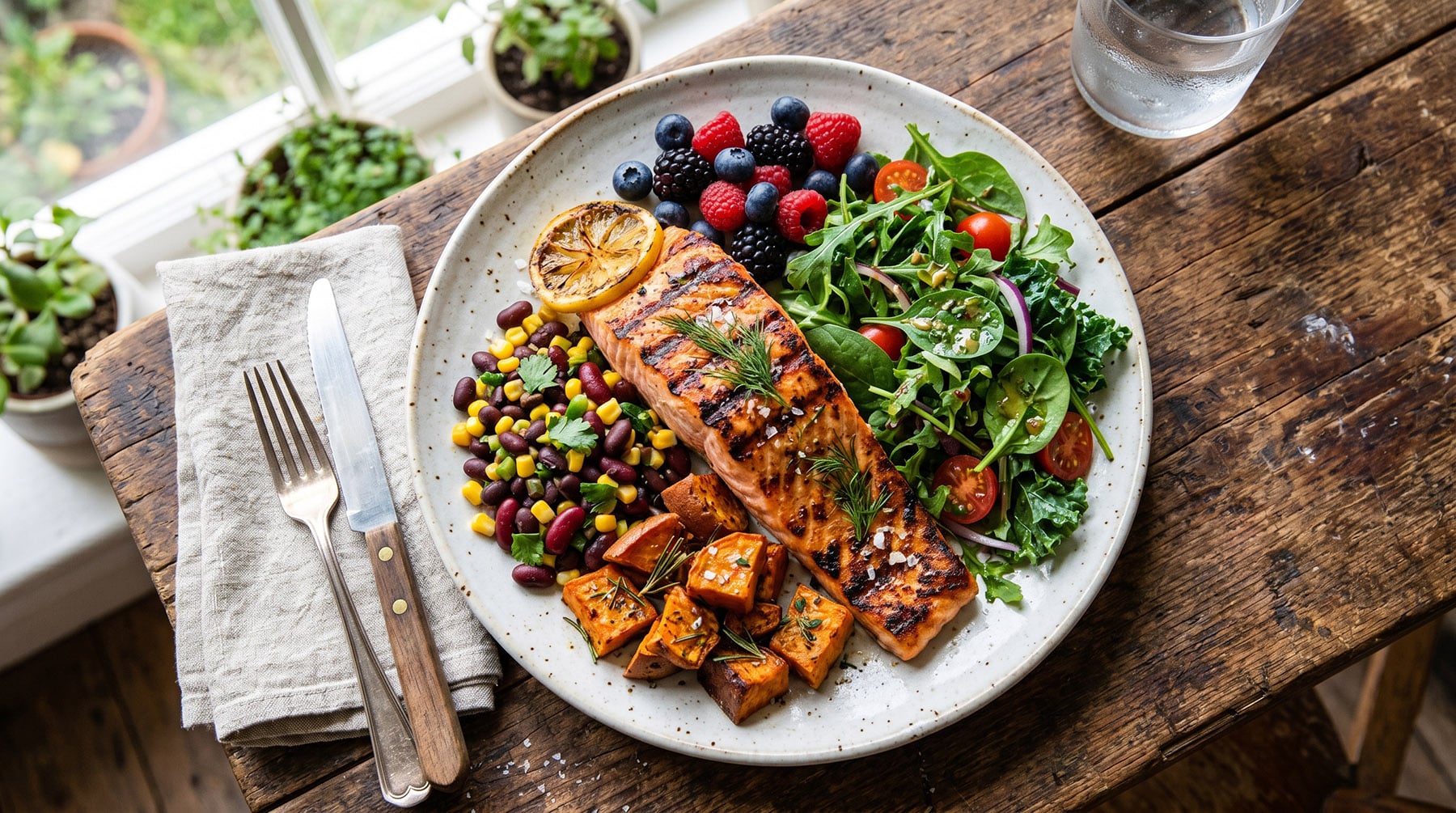
For implementation, the practical strategy is to anchor each meal around produce and let other components fit around it. A breakfast of berries with oats and Greek yogurt delivers two servings; a salad lunch with at least three vegetables delivers three; a dinner with two cooked vegetables and a piece of fruit for dessert closes out the day. Sodium reduction below twenty-three hundred milligrams daily—and ideally toward fifteen hundred—amplifies the blood pressure effect substantially. Patients with stage one hypertension can often reach normotension on DASH alone; those on medication frequently see dose reductions or simplification of regimens within three months. The DASH pattern is not a fad; it is one of the most thoroughly validated nondrug therapies in cardiovascular medicine.
References:
- Appel, L. J., Moore, T. J., Obarzanek, E., Vollmer, W. M., Svetkey, L. P., Sacks, F. M., et al. (1997). A clinical trial of the effects of dietary patterns on blood pressure. New England Journal of Medicine, 336(16), 1117-1124.
- Sacks, F. M., Svetkey, L. P., Vollmer, W. M., Appel, L. J., Bray, G. A., Harsha, D., et al. (2001). Effects on blood pressure of reduced dietary sodium and the Dietary Approaches to Stop Hypertension (DASH) diet. New England Journal of Medicine, 344(1), 3-10.
- Filippou, C. D., Tsioufis, C. P., Thomopoulos, C. G., Mihas, C. C., Dimitriadis, K. S., Sotiropoulou, L. I., et al. (2020). Dietary Approaches to Stop Hypertension (DASH) diet and blood pressure reduction in adults with and without hypertension: A systematic review and meta-analysis of randomized controlled trials. Advances in Nutrition, 11(5), 1150-1160.
Comments are closed