
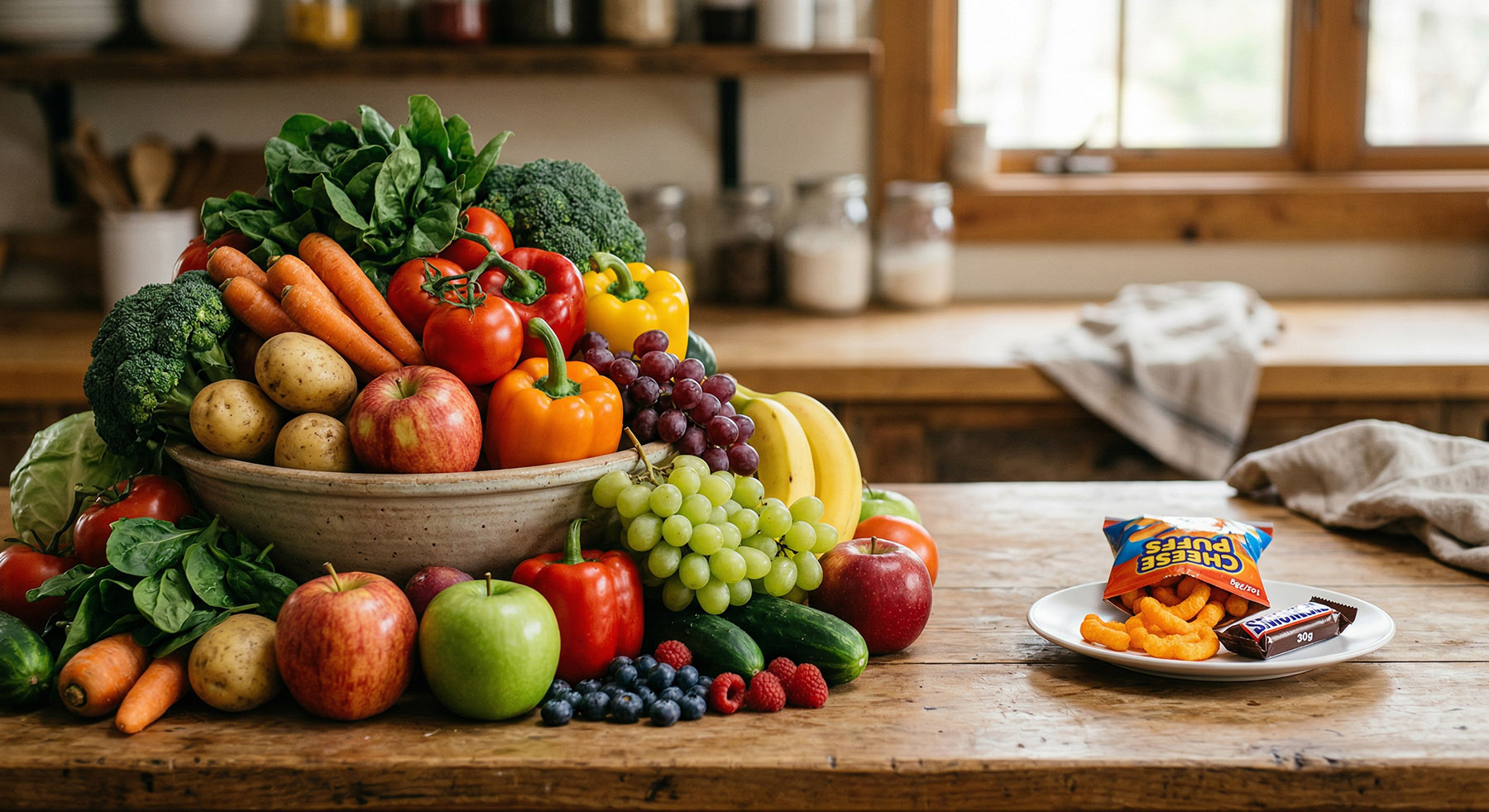
Ultra-processed foods dominate the modern dietary landscape, but their danger lies in more than just excess sugar and fat; they are fundamentally engineered to subvert human biology. These highly refined products undergo extensive processing that strips away their naturally occurring water and dietary fiber, resulting in foods that are exceptionally calorie-dense yet remarkably low in physical volume. This meticulous formulation creates a hyper-palatable experience that encourages rapid consumption. Because the energy in these foods is so highly concentrated, a person can effortlessly ingest hundreds of calories before the digestive system registers the influx of food.
One mechanism is mechanical. Gastric distension activates specialized mechanoreceptors in the stomach wall that send afferent impulses up the vagus nerve to the brain, contributing to fullness. Low-volume, energy-dense foods produce less of this stretch signal per calorie consumed than water- and fiber-rich whole foods, which is a substantial portion of why volumetric eating strategies—built around vegetables, legumes, soups, and fruit—reliably reduce ad libitum intake at a meal. But mechanical stretch is only one input. In Kevin Hall’s 2019 inpatient crossover trial, when ultra-processed and unprocessed meals were carefully matched for presented calories, energy density, macronutrients, sugar, sodium, and fiber, participants still consumed roughly five hundred extra calories per day on the ultra-processed diet and gained nearly a kilogram in two weeks. That result implicates additional drivers beyond simple volume: faster eating rate, altered appetite-hormone responses, hyper-palatable flavor profiles, and reward circuitry that responds to processing per se rather than to caloric content.
The clinical implication is that real-food eating works on multiple satiety levers at once. Whole foods like apples, potatoes, beans, oats, and vegetables provide both the volumetric stretch signal and the slower eating rate, intact food matrix, and intact hormonal feedback that ultra-processed alternatives bypass. Strategic incorporation of low-energy-density foods—a soup or salad before the main course, fruit or vegetables anchoring each meal—has been shown across Barbara Rolls’s body of work to reduce spontaneous calorie intake without conscious restriction. Treating the evening meal, the snack drawer, and the workplace cafeteria with deliberate attention to processing depth, not just to calorie counts, is the durable lever for both weight and metabolic health.
References:
- Hall, K. D., Ayuketah, A., Brychta, R., Cai, H., Cassimatis, T., Chen, K. Y., et al. (2019). Ultra-processed diets cause excess calorie intake and weight gain: An inpatient randomized controlled trial of ad libitum food intake. Cell Metabolism, 30(1), 67-77.
- Rolls, B. J. (2017). Dietary energy density: Applying behavioural science to weight management. Nutrition Bulletin, 42(3), 246-253.
- Phillips, R. J., & Powley, T. L. (2000). Tension and stretch receptors in gastrointestinal smooth muscle: Re-evaluating vagal mechanoreceptor electrophysiology. Brain Research Reviews, 34(1-2), 1-26.
Comments are closed