
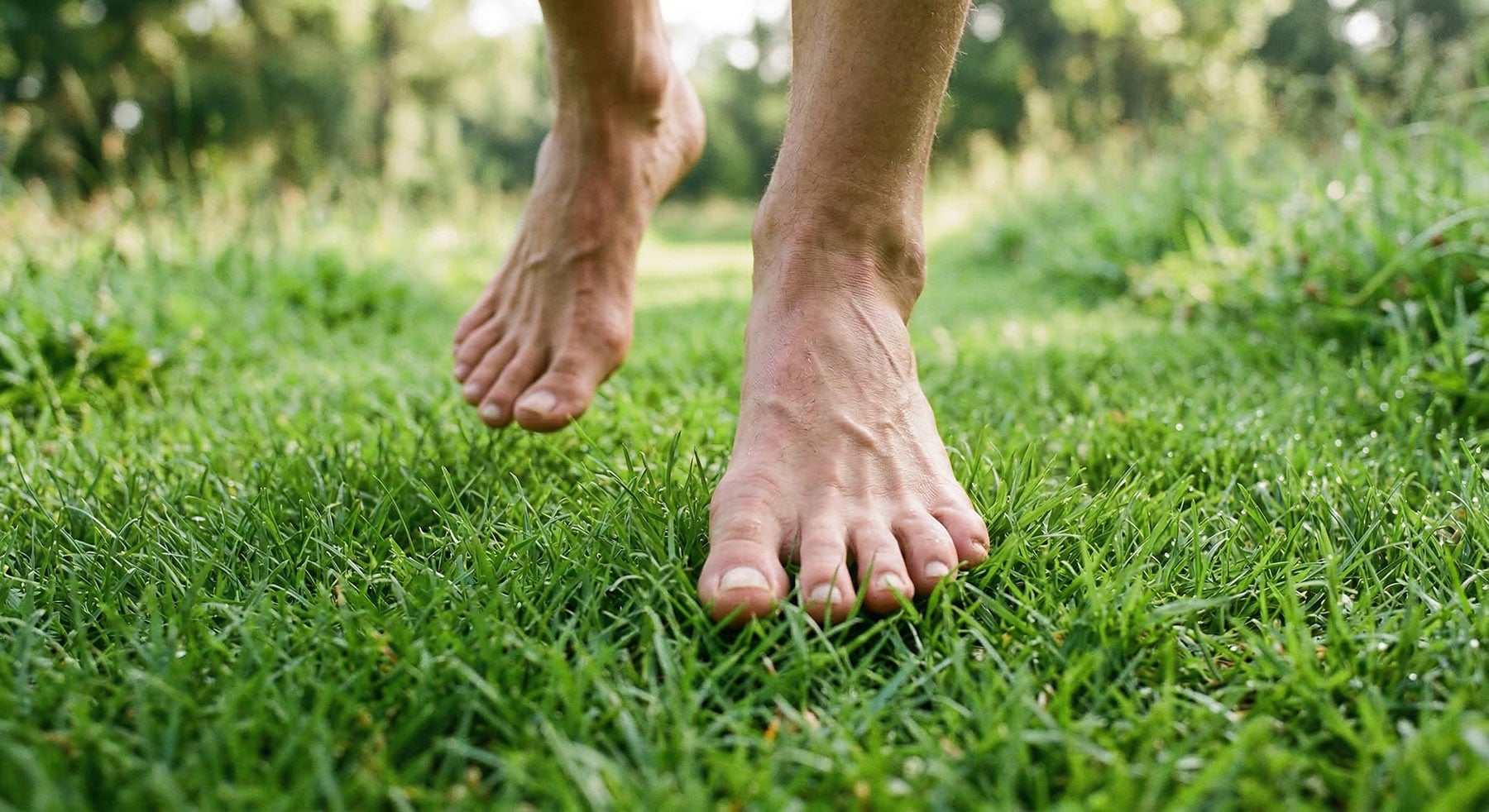
Modern footwear often prioritizes aesthetics and artificial support over biological function, fundamentally altering the natural mechanics of the human foot. Shoes designed with narrow toe boxes compress the toes, preventing them from splaying naturally to absorb shock and balance the body. Coupled with rigid, overly cushioned soles, these shoes act like a cast, restricting movement and causing the intrinsic muscles of the feet to atrophy. Without regular engagement, these micro-muscles—which are responsible for supporting the transverse and longitudinal arches—weaken over time, compromising the foot’s structural integrity.
The consequences of this weak foundation extend far beyond the ankle, initiating a destructive cascade up the entire kinetic chain. When the intrinsic foot muscles weaken, the arch often collapses, leading to overpronation. This inward rolling of the foot forces the tibia and femur into unnatural internal rotation. Because the body operates as an interconnected mechanical system, this misalignment transfers repetitive mechanical stress directly up to the knees, hips, and lower back. What manifests as chronic knee pain or lower back stiffness is frequently a symptom of this foundational instability originating inside our shoes.
The antidote to this structural decay is returning to our evolutionary roots: walking barefoot on natural, variable surfaces like grass, dirt, or sand. Navigating uneven terrain without the barrier of a shoe forces the intrinsic foot muscles to constantly contract, grip, and stabilize, acting as natural resistance training. Furthermore, the soles of the feet are packed with thousands of nerve endings. Exposing them to natural textures drastically improves proprioception—the nervous system’s ability to sense your body’s position in space. By strengthening these micro-muscles and reawakening neural pathways, barefoot walking helps restore the natural arch, realigning the joints and correcting your entire postural chain from the ground up.
References:
- McKeon, P. O., Hertel, J., Bramble, D., & Davis, I. (2015). The foot core system: a new paradigm for understanding intrinsic foot muscle function. British Journal of Sports Medicine, 49(5), 290-299.
- D’Août, K., Pataky, T. C., De Clercq, D., & Aerts, P. (2009). The effects of habitual footwear use: foot shape and function in native barefoot walkers. Footwear Science, 1(2), 81-94.
- Shakoor, N., & Block, J. A. (2006). Walking barefoot decreases loading on the lower extremity joints in patients with knee osteoarthritis. Arthritis & Rheumatism, 54(9), 2923-2927.
Comments are closed