
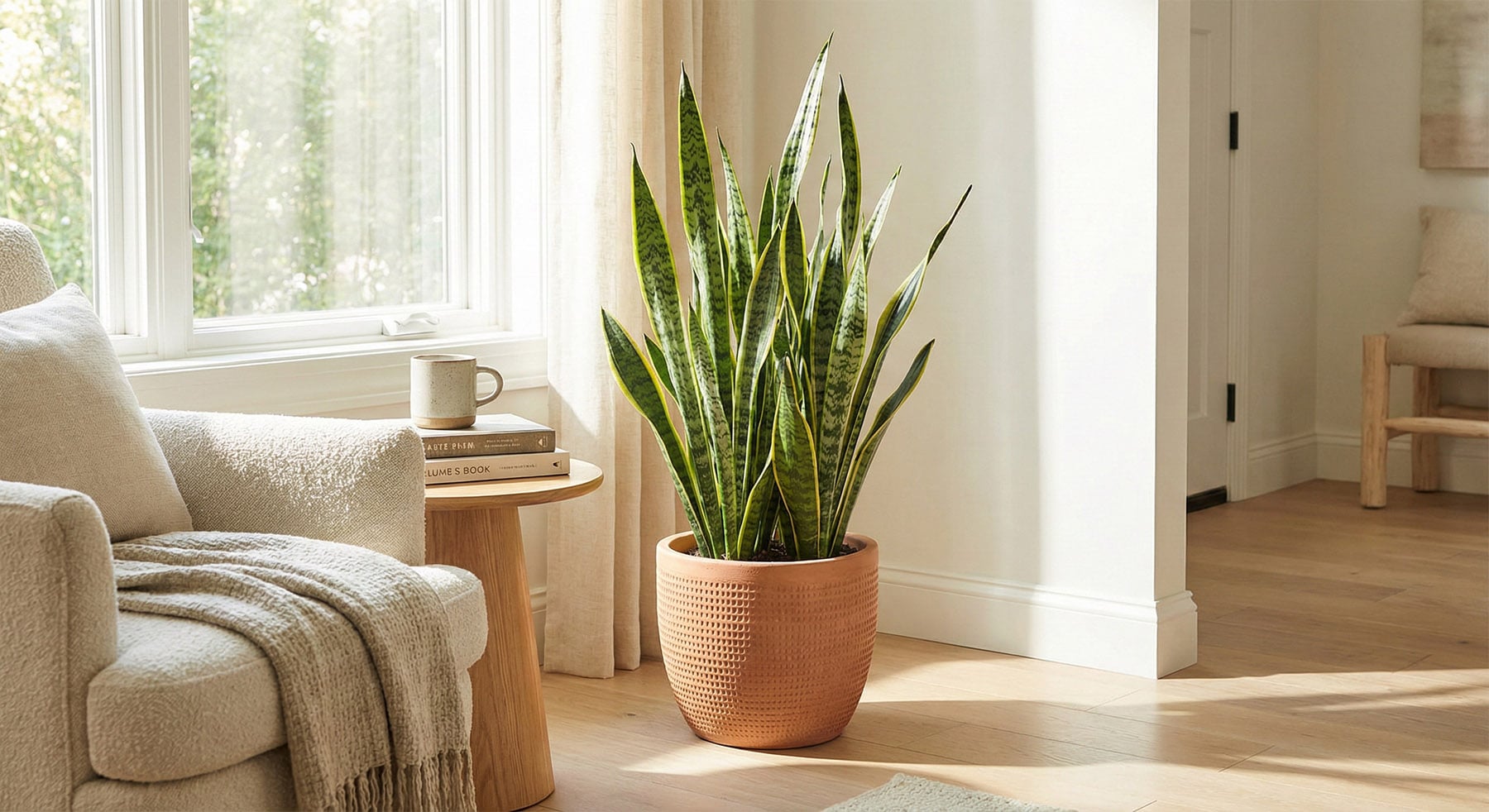
Most of us think of pollution as an outdoor problem, but indoor air can actually be two to five times more polluted than the air outside. Our heavily insulated modern homes are great for energy efficiency, but they easily trap volatile organic compounds (VOCs)—harmful chemicals emitted by everyday items like synthetic carpets, cleaning products, paint, and furniture. Over time, prolonged exposure to poor indoor air quality can contribute to headaches, fatigue, and respiratory irritation. Fortunately, one of the most effective and aesthetically pleasing ways to combat this invisible threat is to bring a bit of the natural world indoors.
Certain resilient houseplants act as living air purifiers, actively filtering out toxins while refreshing the oxygen supply in your home. Varieties like the Snake Plant (Sansevieria trifasciata) and Golden Pothos (Epipremnum aureum) are particularly renowned for their ability to absorb common VOCs such as formaldehyde, benzene, and toluene. Through a process called phytoremediation, these plants pull contaminants from the air and process them down into their roots and soil microorganisms. By strategically placing these low-maintenance green companions around your living spaces, you create a continuous, natural filtration system.
Beyond their physical air-purifying capabilities, plants offer profound psychological benefits that transform the overall atmosphere of your home. Human beings possess an innate biological connection to the natural world, and research demonstrates that simply looking at greenery can significantly reduce sympathetic nervous system arousal—the “fight or flight” response responsible for stress. Having plants in your visual field helps lower blood pressure, soothe feelings of anxiety, and promote recovery from mental fatigue. By incorporating these elements into your home, you do more than just decorate; you cultivate a calming sanctuary that supports both your physical health and your mental well-being.
References
- U.S. Environmental Protection Agency (EPA). (n.d.). Volatile Organic Compounds’ Impact on Indoor Air Quality. (Highlights the finding that indoor levels of pollutants may be 2 to 5 times higher than outdoor levels).
- Wolverton, B. C., Johnson, A., & Bounds, K. (1989). Interior Landscape Plants for Indoor Air Pollution Abatement. National Aeronautics and Space Administration (NASA). (The foundational study on the ability of plants like the Snake Plant and Pothos to filter airborne VOCs).
- Lee, M. S., Lee, J., Park, B. J., & Miyazaki, Y. (2015). Interaction with indoor plants may reduce psychological and physiological stress by suppressing autonomic nervous system activity in young adults: a randomized crossover study. Journal of Physiological Anthropology, 34(1), 21.
Comments are closed