
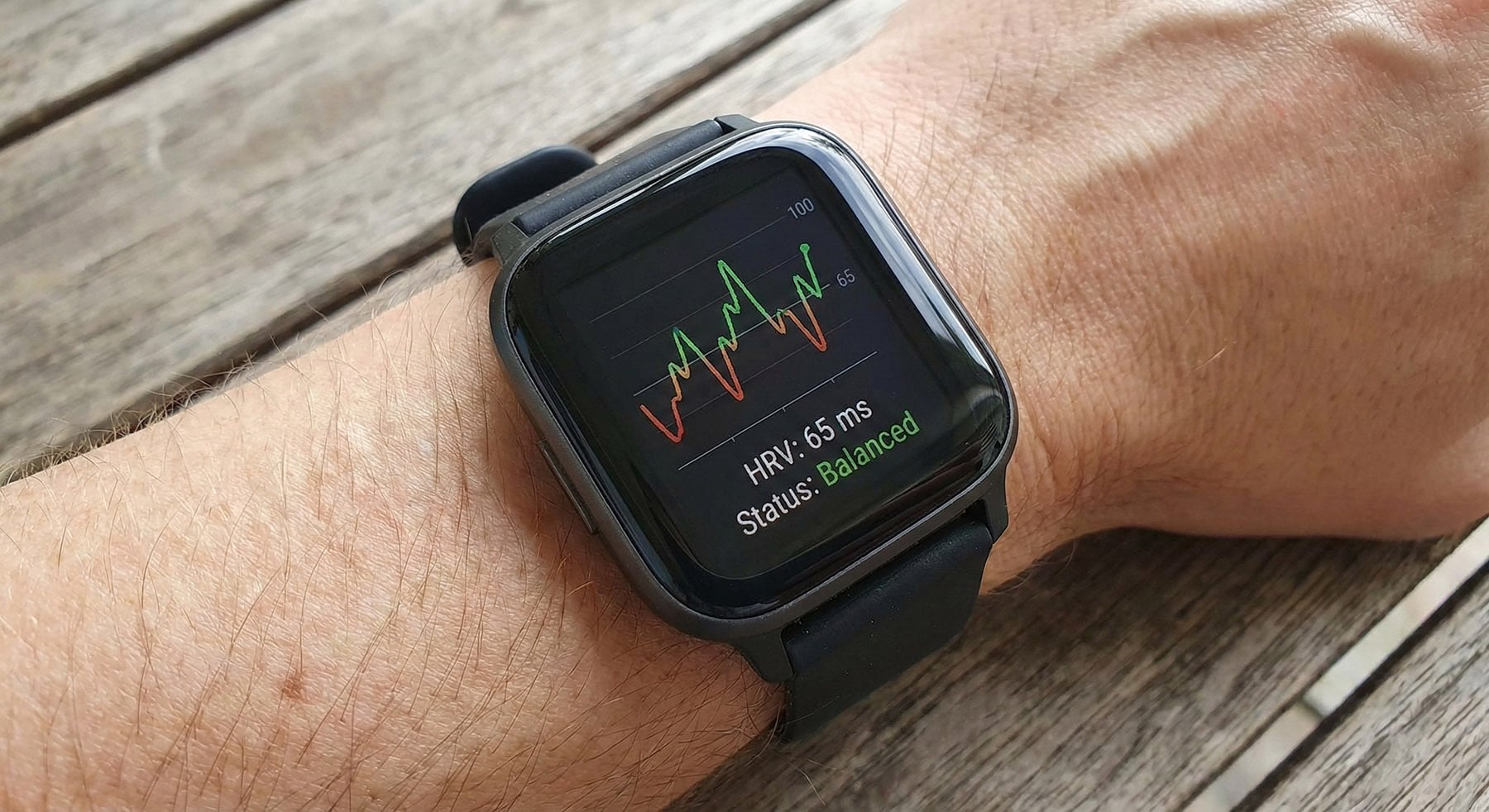
Heart Rate Variability (HRV) is one of the most reliable, non-invasive biomarkers for assessing the state of your autonomic nervous system (ANS). While heart rate measures the number of beats per minute, HRV measures the precise fluctuation in time intervals between consecutive heartbeats, known as the R-R interval. Contrary to popular belief, a healthy heart does not beat with the perfect regularity of a metronome; instead, it varies slightly to adapt to changing internal and external demands. This variation is controlled by the push-and-pull between the two branches of the ANS: the sympathetic (fight-or-flight) and the parasympathetic (rest-and-digest) systems. A responsive, variable heart rate indicates that your nervous system is balanced and capable of shifting gears instantly in response to stimuli [1].
The magnitude of your HRV serves as a powerful proxy for your physiological resilience. A high HRV generally signals that the parasympathetic branch is dominant, indicating your body is well-recovered, adaptable, and in a state of low stress. This is often associated with high cardiovascular fitness and a readiness to perform at peak levels. Conversely, a low HRV suggests that the sympathetic branch is driving the system, often due to physical fatigue, psychological stress, illness, or dehydration. When HRV remains chronically low, it can be a significant warning sign of non-functional overreaching or overtraining, meaning the body is struggling to recover from the loads placed upon it [2].
Modern wearable technology—such as smartwatches and fitness trackers—has democratized access to this clinical-grade data, allowing individuals to optimize their daily schedules based on biology rather than guesswork. By tracking HRV trends over time (typically during sleep or immediately upon waking), you can tailor your training intensity to your body’s actual capacity. For example, a higher-than-average HRV reading suggests it is safe to push hard during a workout, while a significantly suppressed score indicates that active recovery or rest is required to prevent injury and burnout. This “bio-feedback” loop helps align lifestyle choices with physiological needs, ultimately improving long-term performance and well-being [3].
References
- Shaffer, F., & Ginsberg, J. P. (2017). An Overview of Heart Rate Variability Metrics and Norms. Frontiers in Public Health, 5, 258.
- Campos, M. (2017). Heart Rate Variability: A New Way to Track Well-being. Harvard Health Publishing.
- Plews, D. J., Laursen, P. B., Stanley, J., Kilding, A. E., & Buchheit, M. (2013). Training Adaptation and Heart Rate Variability in Elite Endurance Athletes: Opening the Door to Effective Monitoring. Sports Medicine, 43(9), 773-781.
Comments are closed