
- In a 2020 meta-analysis of 16 clinical trials, coconut oil raised LDL cholesterol by about 10 mg/dL compared with non-tropical vegetable oils, and it did not improve body fat, blood sugar, or inflammation markers.
- Stearic acid, the saturated fat that cocoa butter is known for, lowered LDL cholesterol by 21% compared with palmitic acid in a controlled feeding study, about as much as oleic acid did.
- In long-term randomized trials, cutting saturated fat reduced combined cardiovascular events by 17%, and the greater the reduction, the greater the benefit.
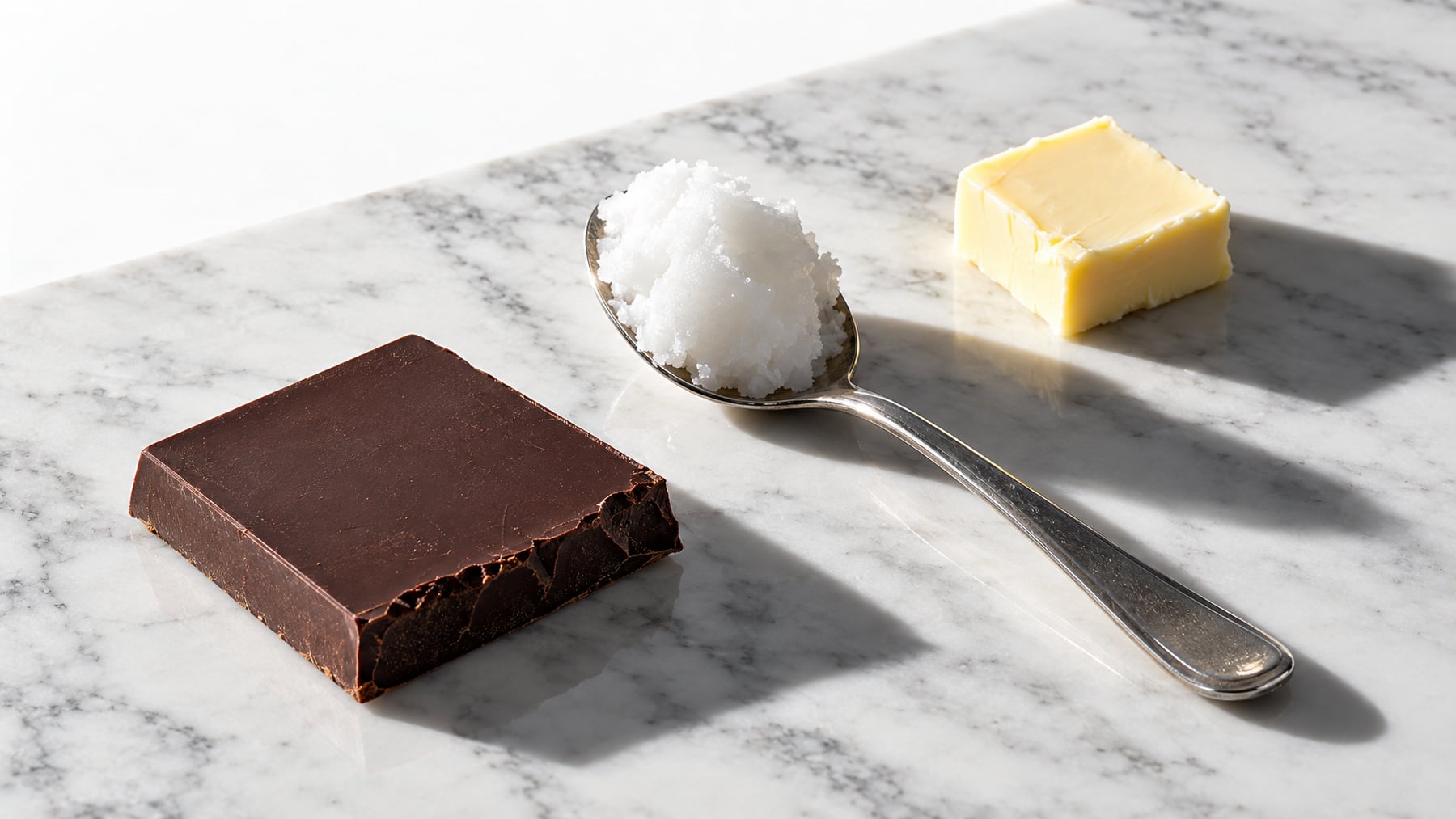
Coconut oil is having a moment. It shows up in coffee, in smoothie recipes, and on lists of "clean" fats, often with the claim that its saturated fat is somehow the good kind. I'm not a fan, and I'll explain why. But here is the part that surprises people: if you made me choose between a spoonful of coconut oil and a square of dark chocolate, the chocolate gets more of a pass than you would think. The question patients actually ask me is about coconut oil and cholesterol: is it good, bad, or overblown? The honest answer starts with something most nutrition advice skips. Saturated fat is not one thing. It is a family of fatty acids of different lengths, with names like lauric, myristic, palmitic, and stearic, and they do not act the same way on your blood. Treating them as identical is how coconut oil got oversold and how chocolate got lumped in with butter. The label on the jar says "saturated fat" either way. Your LDL cholesterol, the number that tracks with plaque in the arteries, can tell the difference.
Start with coconut oil, because that is where the hype is. A 2020 meta-analysis pooled 16 clinical trials that compared coconut oil with other cooking fats for at least two weeks. Compared with non-tropical vegetable oils such as olive or soybean oil, coconut oil raised LDL cholesterol by about 10 mg/dL. It also raised HDL, the "good" cholesterol, by about 4 mg/dL, which fans of coconut oil like to point out, but it did not improve body fat, blood sugar, or inflammation, and those trials measured blood fats, not heart attacks. Now the surprise. Stearic acid, the saturated fat that cocoa butter is known for, behaves very differently. In a controlled feeding study, a diet rich in stearic acid lowered LDL by 21% compared with an otherwise identical diet rich in palmitic acid, about as much as oleic acid, the main fat in olive oil, did. A whole-food study using cocoa butter, olive oil, soybean oil, and dairy butter found butter raised cholesterol, while the liquid oils did better than cocoa butter. So stearic acid looks gentler than other saturated fats, but still not as good as unsaturated ones.
Is coconut oil bad for your cholesterol?
For most people, yes, compared with what it usually replaces in a kitchen. Everyone tells you to cut saturated fat. I care more about which one and what it replaces. A meta-analysis of 60 controlled feeding trials found that the ratio of total to HDL cholesterol, a sharp marker of heart risk, improved when unsaturated fats replaced saturated fat and did not change when carbohydrates did. Long-term trials are messier but point the same direction overall: cutting saturated fat for at least two years reduced combined cardiovascular events by 17%, with bigger cuts bringing bigger benefits, and both polyunsaturated fat and carbohydrate looked like useful replacements. In practice, that means making olive, canola, or soybean oil your everyday cooking fat, keeping butter and coconut oil as occasional flavors rather than defaults, and not feeling guilty about a square or two of dark chocolate, which still brings sugar and calories but is not the saturated fat I worry about. If you have recently switched to coconut oil and your LDL went up, that is probably not a coincidence; switch back and recheck. Saturated fat isn't one thing, and the swap matters more than the label.
References
- Neelakantan, N., Seah, J. Y. H., & van Dam, R. M. (2020). The effect of coconut oil consumption on cardiovascular risk factors: A systematic review and meta-analysis of clinical trials. Circulation, 141(10), 803-814.
- Bonanome, A., & Grundy, S. M. (1988). Effect of dietary stearic acid on plasma cholesterol and lipoprotein levels. The New England Journal of Medicine, 318(19), 1244-1248.
- Kris-Etherton, P. M., Derr, J., Mitchell, D. C., Mustad, V. A., Russell, M. E., McDonnell, E. T., et al. (1993). The role of fatty acid saturation on plasma lipids, lipoproteins, and apolipoproteins: I. Effects of whole food diets high in cocoa butter, olive oil, soybean oil, dairy butter, and milk chocolate on the plasma lipids of young men. Metabolism, 42(1), 121-129.
- Hunter, J. E., Zhang, J., & Kris-Etherton, P. M. (2010). Cardiovascular disease risk of dietary stearic acid compared with trans, other saturated, and unsaturated fatty acids: A systematic review. The American Journal of Clinical Nutrition, 91(1), 46-63.
- Mensink, R. P., Zock, P. L., Kester, A. D., & Katan, M. B. (2003). Effects of dietary fatty acids and carbohydrates on the ratio of serum total to HDL cholesterol and on serum lipids and apolipoproteins: A meta-analysis of 60 controlled trials. The American Journal of Clinical Nutrition, 77(5), 1146-1155.
- Hooper, L., Martin, N., Jimoh, O. F., Kirk, C., Foster, E., & Abdelhamid, A. S. (2020). Reduction in saturated fat intake for cardiovascular disease. Cochrane Database of Systematic Reviews, 8(8), CD011737.
Comments are closed