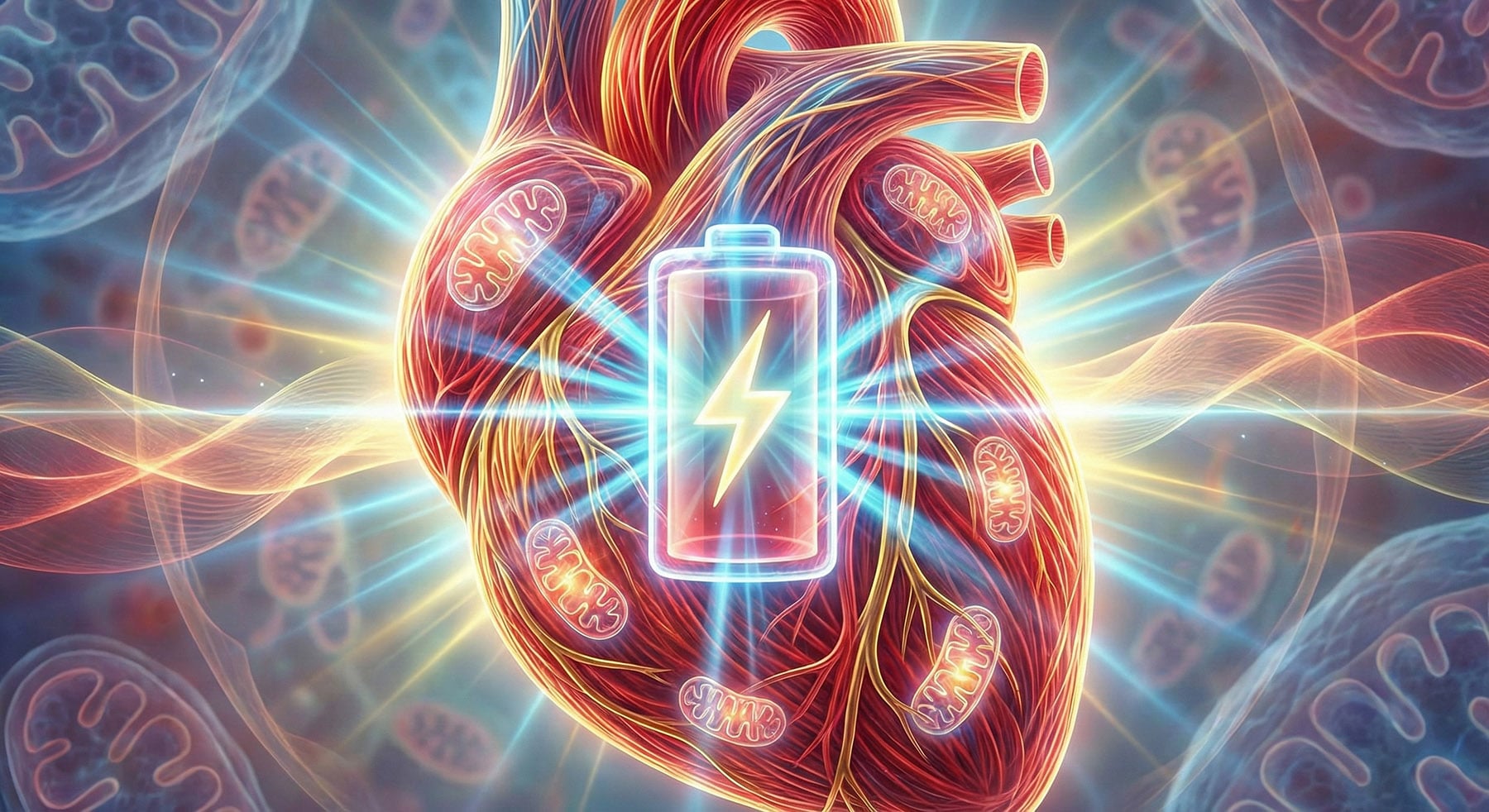
Coenzyme Q10 (CoQ10) is a fat-soluble compound that acts as the essential “spark plug” for cellular energy production. It resides within the mitochondria—the microscopic power plants inside our cells—where it plays a critical role in the electron transport chain to generate adenosine triphosphate (ATP), the body’s primary fuel source. While CoQ10 is found in every cell, its concentration is highest in organs with the most demanding energy requirements, specifically the heart, kidneys, and liver. The heart muscle never rests, requiring a constant and massive supply of ATP to maintain its rhythm; consequently, adequate CoQ10 levels are vital for optimal cardiac contractility and overall heart failure prevention [1, 2].
However, maintaining these levels can be challenging for the millions of individuals prescribed statin medications (HMG-CoA reductase inhibitors) to manage cholesterol. Statins function by inhibiting the mevalonate pathway, which successfully lowers LDL cholesterol but simultaneously blocks the body’s natural synthesis of CoQ10. Research indicates that statin therapy can significantly lower circulating serum CoQ10 levels. This depletion is hypothesized to contribute to statin-associated muscle symptoms (SAMS), a common side effect characterized by muscle weakness, myalgia (pain), and cramps, which often leads to patients discontinuing their life-saving medication [3, 4].
Supplementation offers a viable strategy to counteract this depletion, with the form of the nutrient being a key factor in efficacy. While conventional CoQ10 supplements contain ubiquinone (the oxidized form), Ubiquinol is the reduced, active antioxidant form that acts as an electron donor. Ubiquinol is generally considered to have superior bioavailability, particularly in older adults or those with compromised metabolic efficiency, allowing for more effective restoration of plasma CoQ10 levels. A 2018 meta-analysis published in the Journal of the American Heart Association found that CoQ10 supplementation could ameliorate statin-associated muscle symptoms, potentially allowing patients to maintain their heart-protective statin regimen with fewer adverse effects [5, 6].
References
- DiNicolantonio, J. J., et al. (2015). Coenzyme Q10 for the treatment of heart failure: a review of the literature. Open Heart, 2(1), e000326.
- Zozina, V. I., et al. (2018). Coenzyme Q10 in Cardiovascular and Metabolic Diseases: Current State of the Problem. Current Cardiology Reviews, 14(3), 164–174.
- Stojanovic, M., & Radenkovic, M. (2024). Mechanism of Statin-Induced Coenzyme Q10 Depletion and Its Clinical Implications. International Journal of Molecular Sciences, 25(4), 2345.
- Qu, H., et al. (2018). Effects of Coenzyme Q10 on Statin-Induced Myopathy: An Updated Meta-Analysis of Randomized Controlled Trials. Journal of the American Heart Association, 7(19), e009835.
- Zhang, Y., et al. (2018). Ubiquinol is superior to ubiquinone to enhance Coenzyme Q10 status in older men. Food & Function, 9(11), 5653-5659.
- Raizner, A. E. (2019). Coenzyme Q10. Methodist DeBakey Cardiovascular Journal, 15(3), 185–191.
Comments are closed